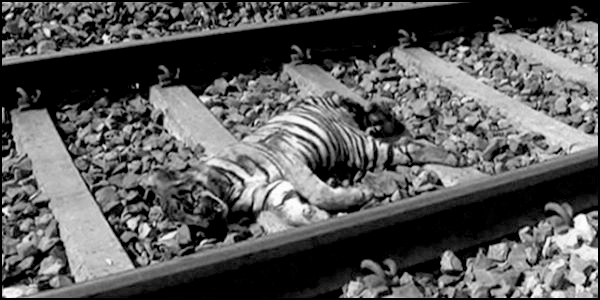
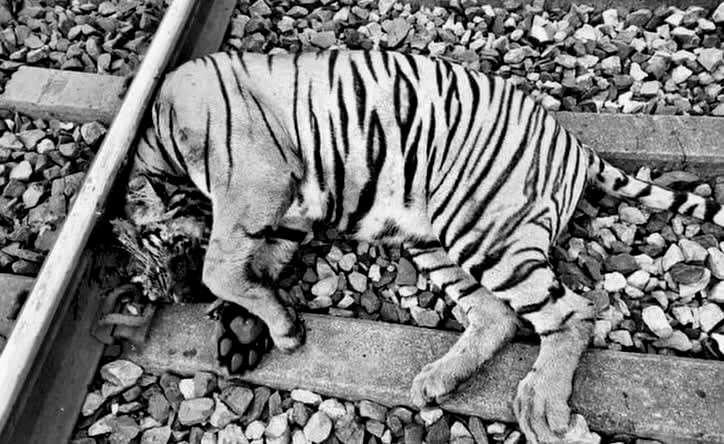
Chandrapur, Maharashtra: A tragic incident on the Gondia–Ballarshah railway corridor has once again highlighted the growing conflict between wildlife conservation and railway operations in central India. A three-year-old tigress lost her life after being hit by a train between Sindewahi and Rajoli stations in Chandrapur district.
According to forest department officials, the accident occurred in the early morning hours when the tigress was attempting to cross the railway track in the Lonkhari forest beat of the Sindewahi range. The impact caused severe injuries, resulting in the animal’s death on the spot. The train driver immediately informed railway authorities, who then alerted forest officials.
A team of forest officers and veterinarians rushed to the scene to conduct an investigation. A post-mortem examination confirmed that the tigress died from injuries sustained in the collision. Senior forest department officials and wildlife experts were present during the inspection, after which the carcass was disposed of according to official procedures.
The incident has renewed concerns about the Gondia–Ballarshah railway route, which passes through an important wildlife corridor connecting the Tadoba-Andhari Tiger Reserve with several other protected forest areas. Conservationists describe the stretch as one of the most dangerous railway routes for wildlife in India.
Environmental groups point out that more than 130 wild animals, including numerous tigers, have been killed on this railway corridor over the past two decades. Previous accidents involving tigers and other large mammals have sparked demands for stronger safety measures such as reduced train speeds, wildlife underpasses, advanced monitoring systems, and better coordination between railway and forest authorities.
Wildlife activists have urged authorities to enforce stricter speed limits in forested zones, especially during night hours when animal movement is highest. The issue has also attracted the attention of the Bombay High Court, which has previously sought reports and recommendations from railway and forest departments regarding wildlife protection along the route.
The death of the young tigress serves as another reminder of the challenges faced by India’s conservation efforts. While tiger populations have shown encouraging growth in several reserves, increasing encounters with roads and railway lines continue to threaten their survival.
Experts believe that balancing infrastructure development with wildlife conservation is essential to prevent similar tragedies in the future. They stress that timely implementation of mitigation measures could save countless animals and help preserve critical wildlife corridors across the country.
As investigations continue, the incident has once again sparked debate about the urgent need for safer railway operations in ecologically sensitive areas and stronger protection for India’s iconic wildlife.