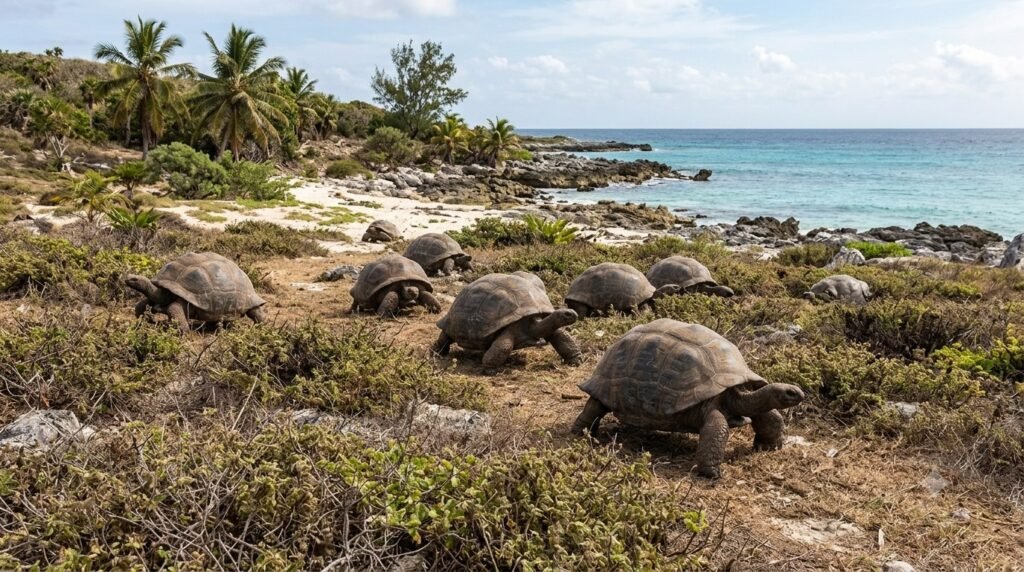
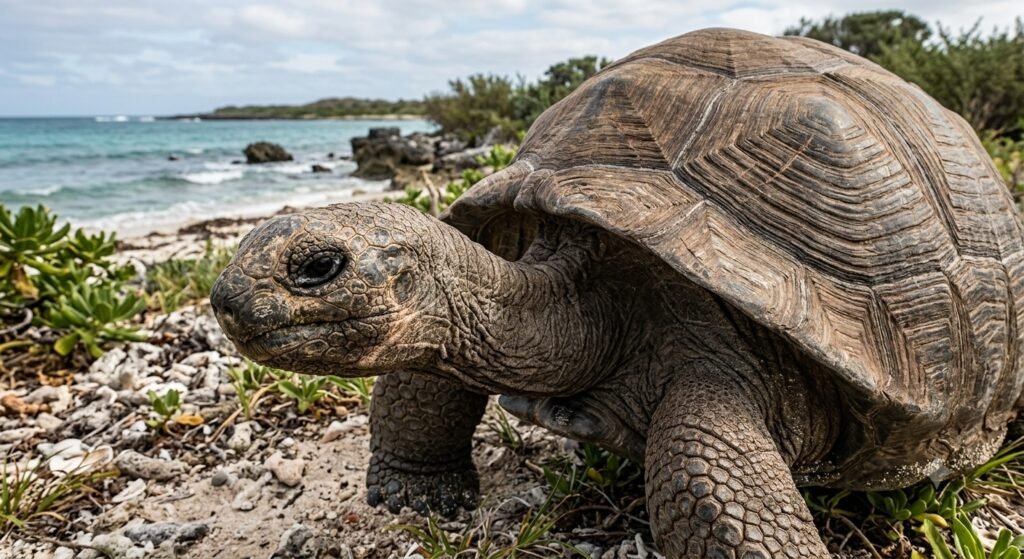
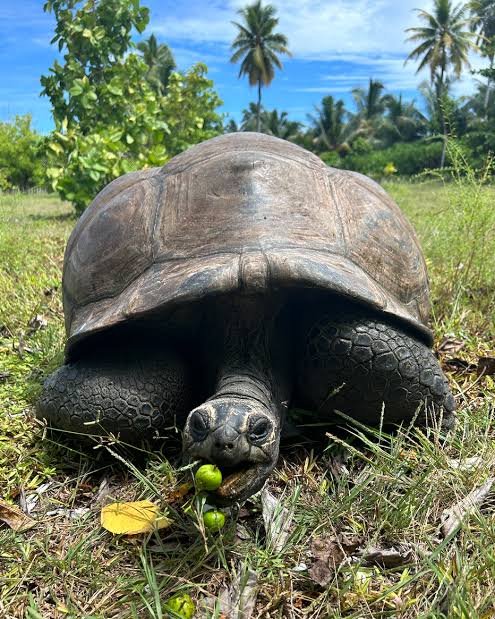
A giant Aldabra tortoise moves across the grasslands of Aldabra Atoll in the Seychelles, home to
an estimated 183,000 adult and near-adult giant tortoises—the world’s largest population of
free-living giant tortoises.
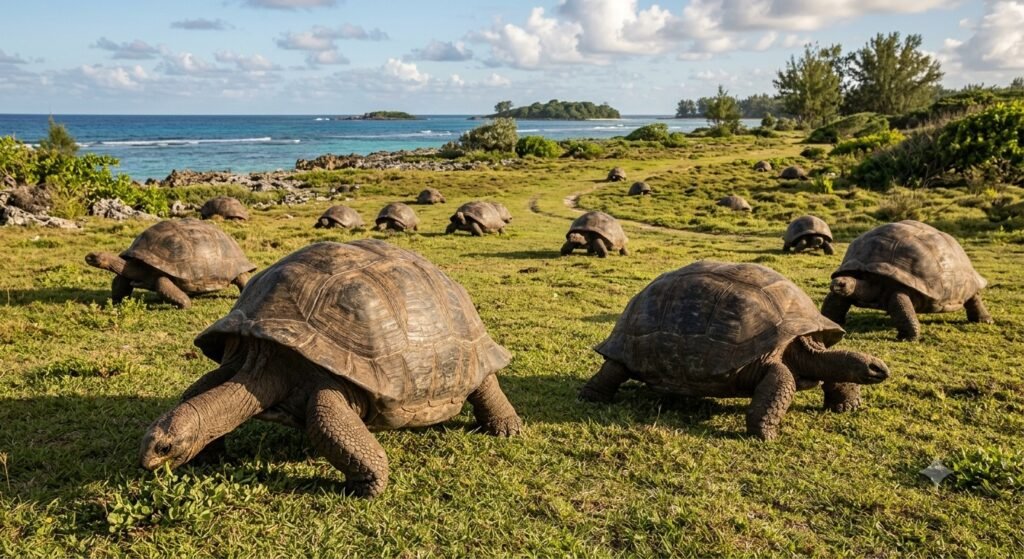
Seychelles: The remote Aldabra Atoll in the Seychelles is home to an estimated 183,000 giant tortoises, making it the largest population of free-living giant tortoises in the world. The remarkable figure highlights the success of long-term conservation efforts that have helped the species recover from severe historical declines.
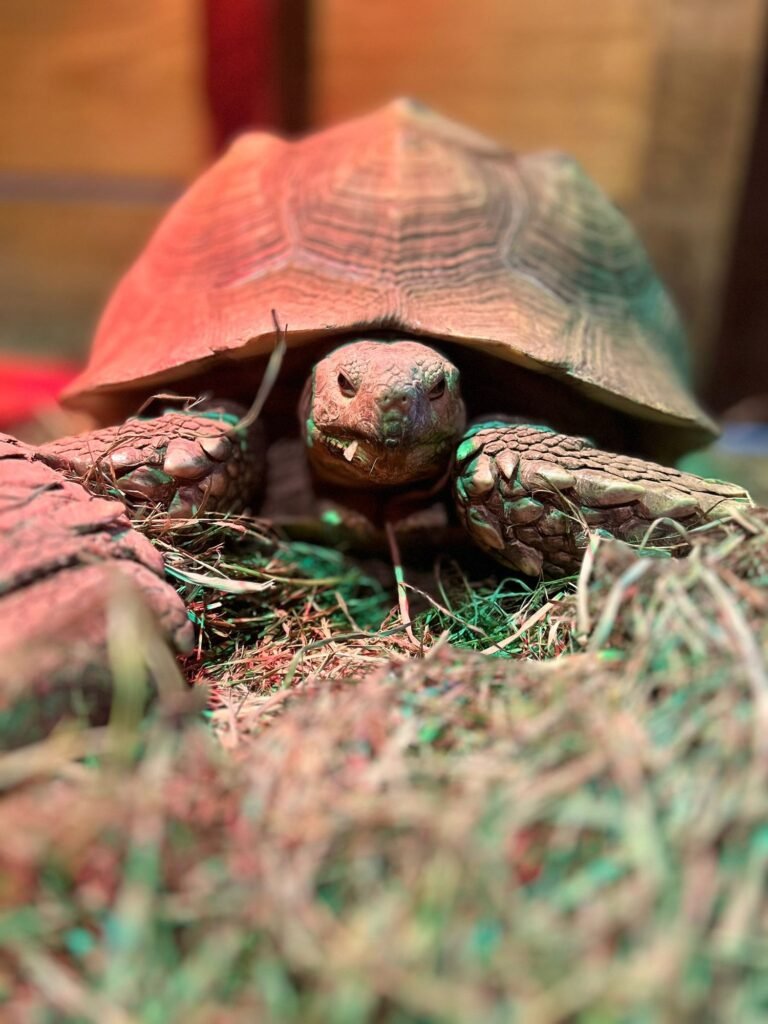
The estimated tortoise population exceeds the human population of the entire Seychelles, reported to be approximately 135,000. However, the latest findings do not necessarily mean that tortoise numbers have nearly doubled since the previous major estimate. Instead, researchers believe earlier surveys may have missed many individuals hidden among dense vegetation.
The new population estimate was produced by scientists from the Seychelles Islands Foundation (SIF) and the University of Exeter. The study used data collected between 2018 and 2022 and accounted for tortoises that were difficult to observe because they were concealed by shrubs and trees. The findings were published in the scientific journal Ecology and Evolution.
A previous major estimate, conducted in the late 1990s, suggested that approximately 100,000 giant tortoises lived on Aldabra. By incorporating the likelihood of animals being missed during field surveys, the latest research provides a more comprehensive assessment of the population. The study estimates approximately 183,000 adult and near-adult tortoises, with relatively little population change recorded during the 2018–2022 survey period.
From Near-Extinction to Conservation Success
During the 19th century, extensive hunting caused Aldabra’s giant tortoise population to decline to fewer than 1,000 individuals. Conservation measures subsequently helped protect the species and its fragile island habitat.
Aldabra was designated a protected natural area in 1981 and became a UNESCO World Heritage Site in 1982. Decades of protection, monitoring and habitat management have contributed to the survival of this extraordinary population.
According to Seychelles Islands Foundation chief executive Frauke Fleischer-Dogley, the presence of more than 180,000 giant tortoises living in the wild reflects the results of sustained conservation efforts.
Grasslands Support the Largest Numbers
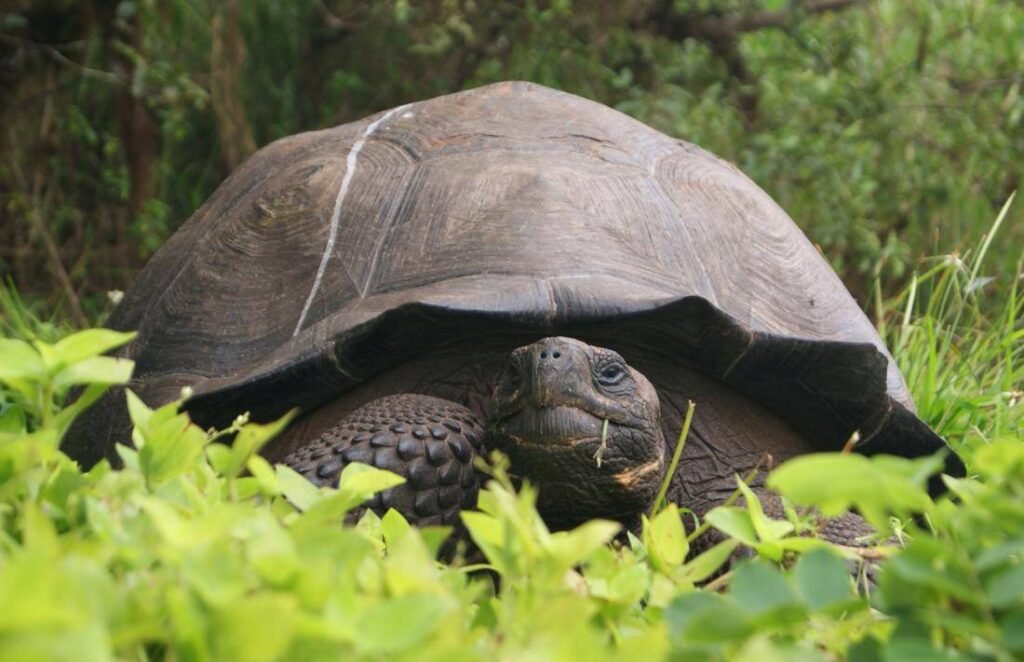
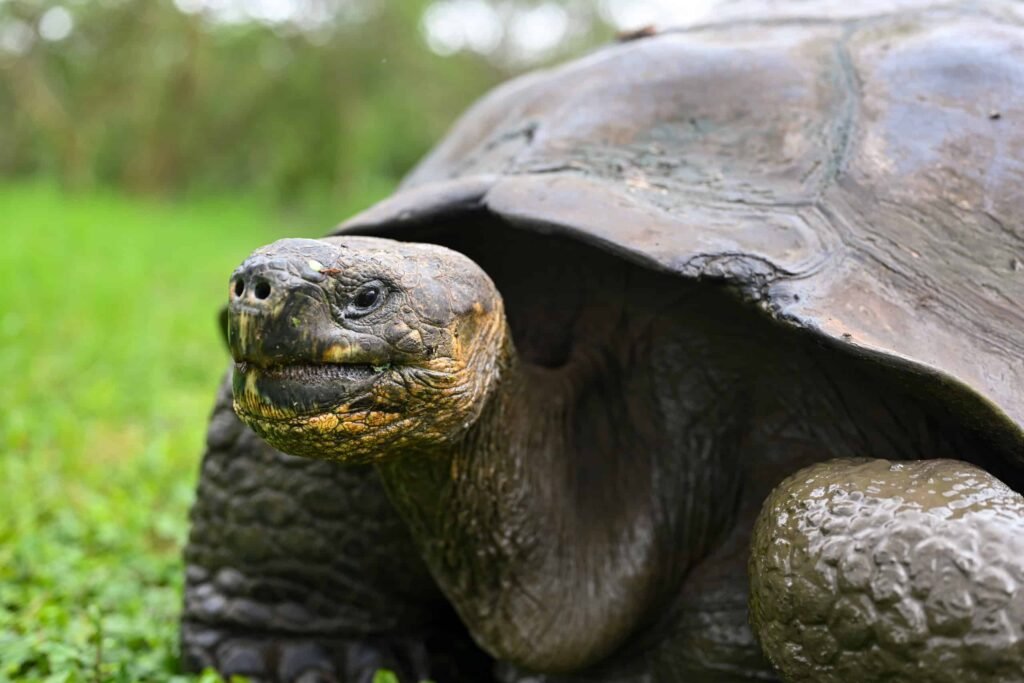
The survey found that giant tortoises were particularly abundant in grass-dominated habitats known as tortoise turf. Open areas with relatively sparse vegetation also supported substantial numbers of animals.
In contrast, tortoises were more difficult to detect in dense scrub, mangroves and areas dominated by plants such as Pemphis. Researchers accounted for these differences in visibility when estimating the overall population, helping improve the accuracy of their findings.
Climate Change and Invasive Animals Remain Threats
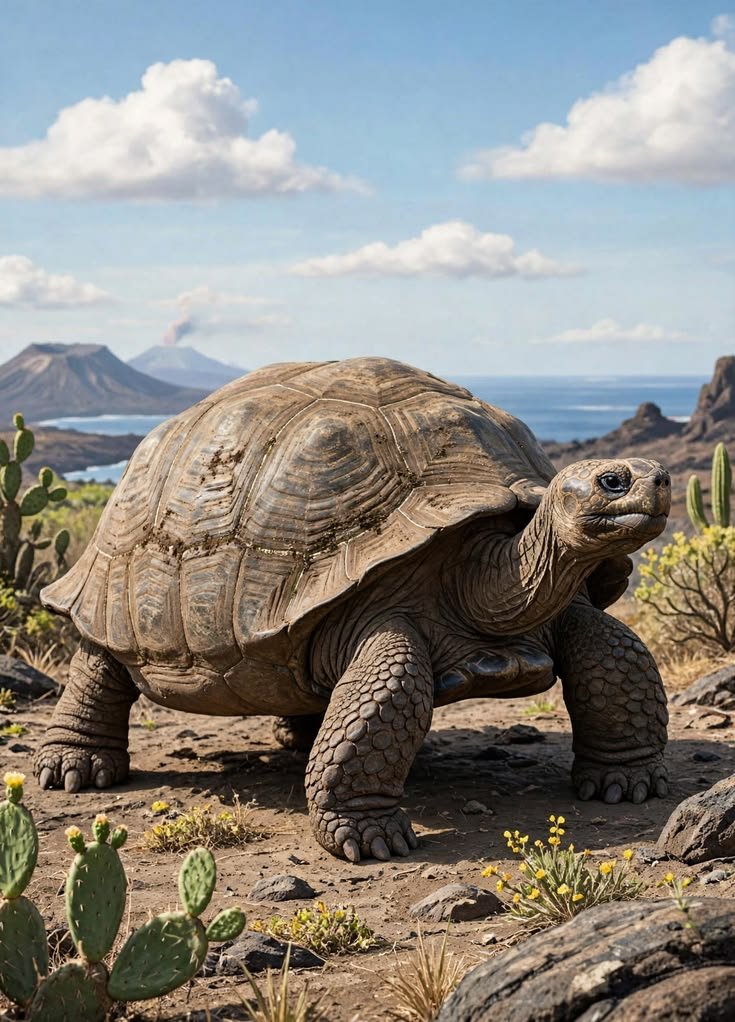
Despite the encouraging population estimate, Aldabra’s giant tortoises continue to face environmental challenges. Climate change could increase the frequency and duration of droughts, reducing the availability of food, water and shade. Rising sea levels also threaten low-lying parts of the atoll.
Invasive animals pose additional risks. Feral cats and black rats can prey on tortoise eggs and hatchlings, threatening the survival of younger generations. Feral goats, which previously damaged native vegetation, were eradicated from Aldabra in 2012.
Researchers suggest that managing invasive predators could further strengthen conservation efforts and improve the survival prospects of young tortoises.
Monitoring the Future of Aldabra’s Giants
The new population estimate provides an important baseline for future research. Continued monitoring will help scientists determine how the tortoises respond to climate change, drought and other environmental pressures.
Aldabra’s giant tortoises demonstrate how long-term protection can help wildlife recover from severe historical declines. However, maintaining this success will require continued scientific monitoring, habitat conservation and effective management of invasive species.
The survival of approximately 183,000 giant tortoises on this remote atoll is a remarkable conservation achievement—and a reminder that protecting wildlife requires sustained commitment across generations.