India’s indigenous art traditions are among the country’s most compelling cultural treasures. Rich in symbolism, deeply rooted in oral traditions, and inspired by the natural world, these art forms offer a window into the lives and beliefs of tribal communities that have preserved their heritage for centuries. Among the most celebrated are Gond and Bhil art. While both have gained international recognition and originate from the central regions of India, they are frequently mistaken for one another.
In reality, Gond and Bhil art belong to two entirely different tribal communities, each with its own mythology, history, and artistic vocabulary. Although both traditions evolved from ritual wall paintings to contemporary works on paper and canvas, their visual language, cultural symbolism, and storytelling traditions remain distinctly unique.
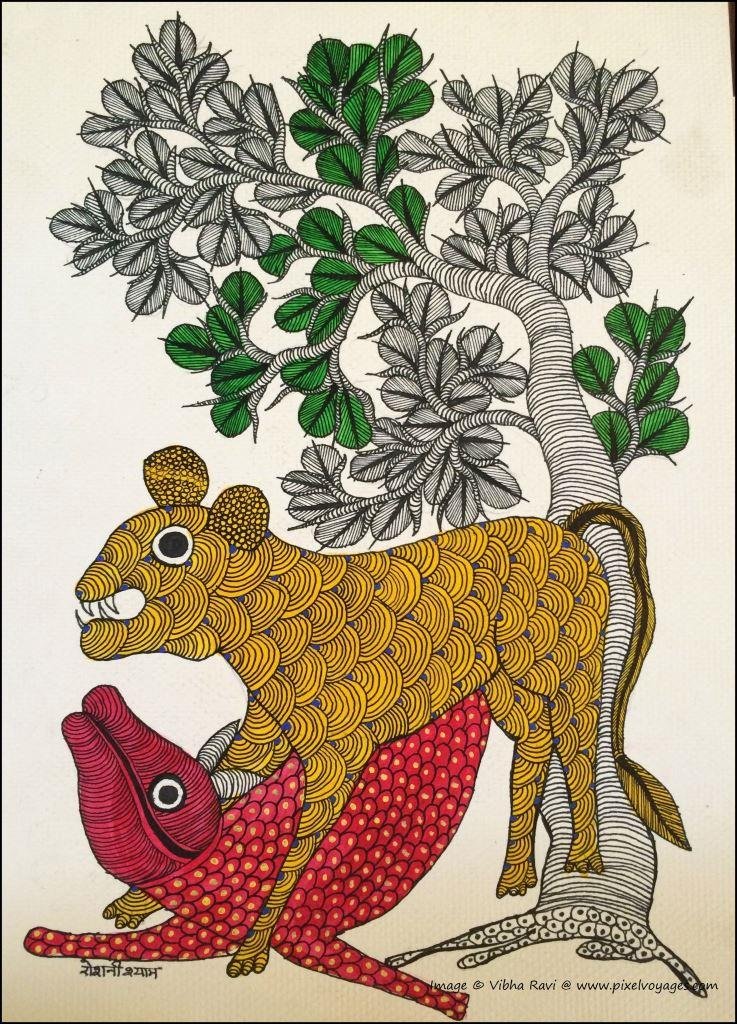
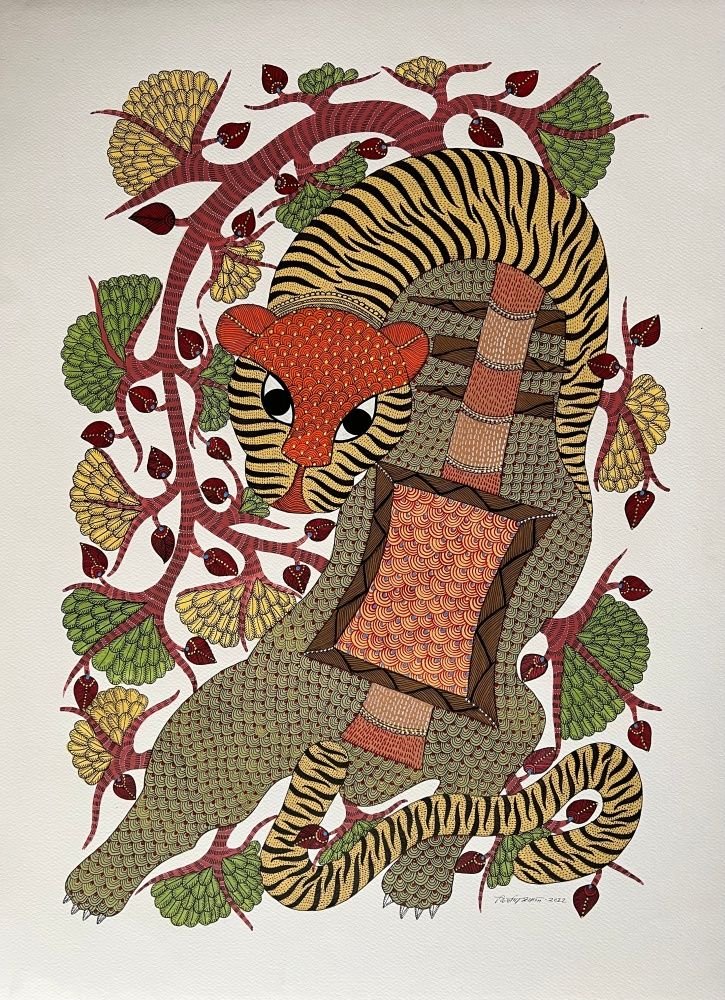
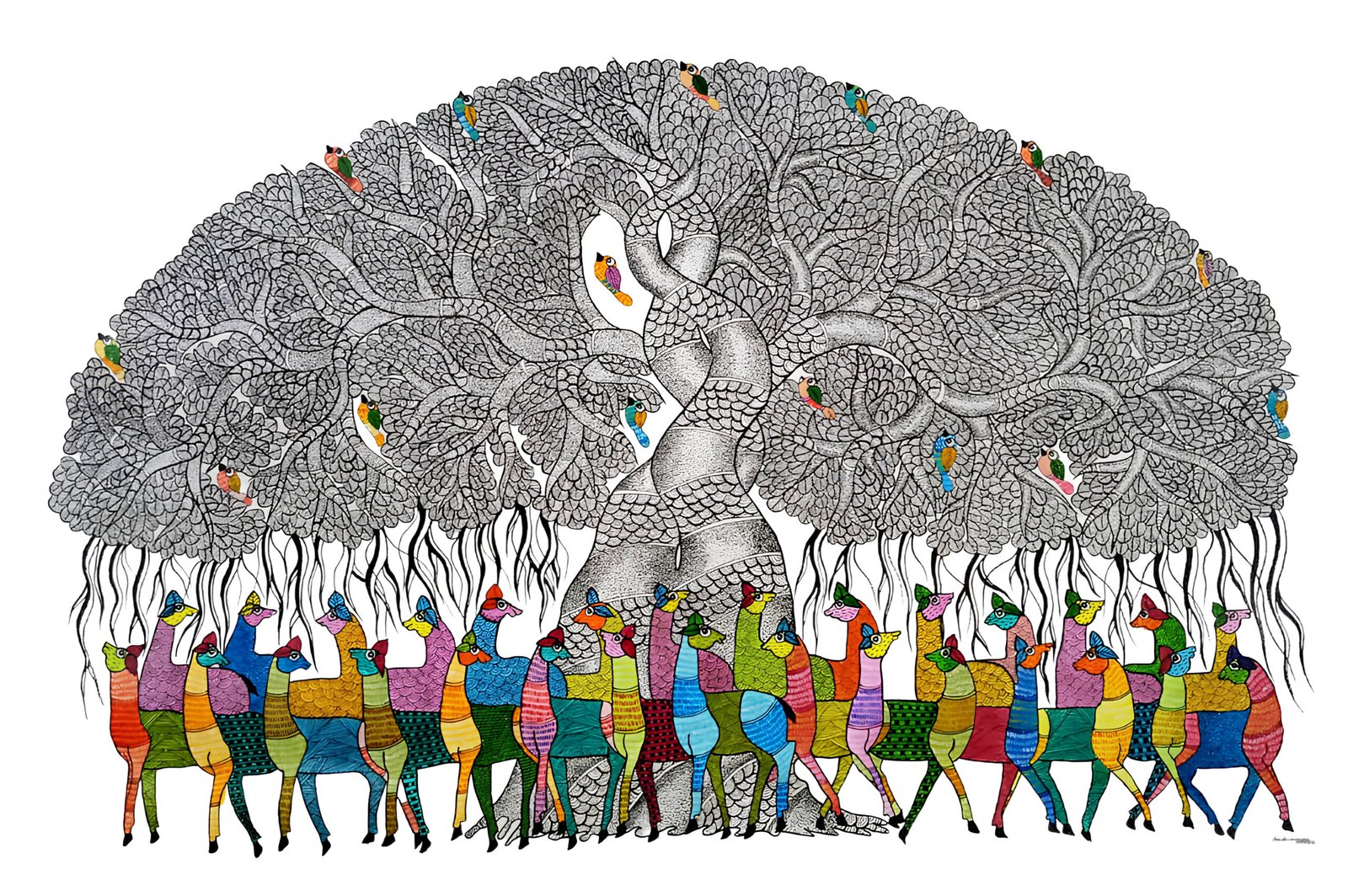
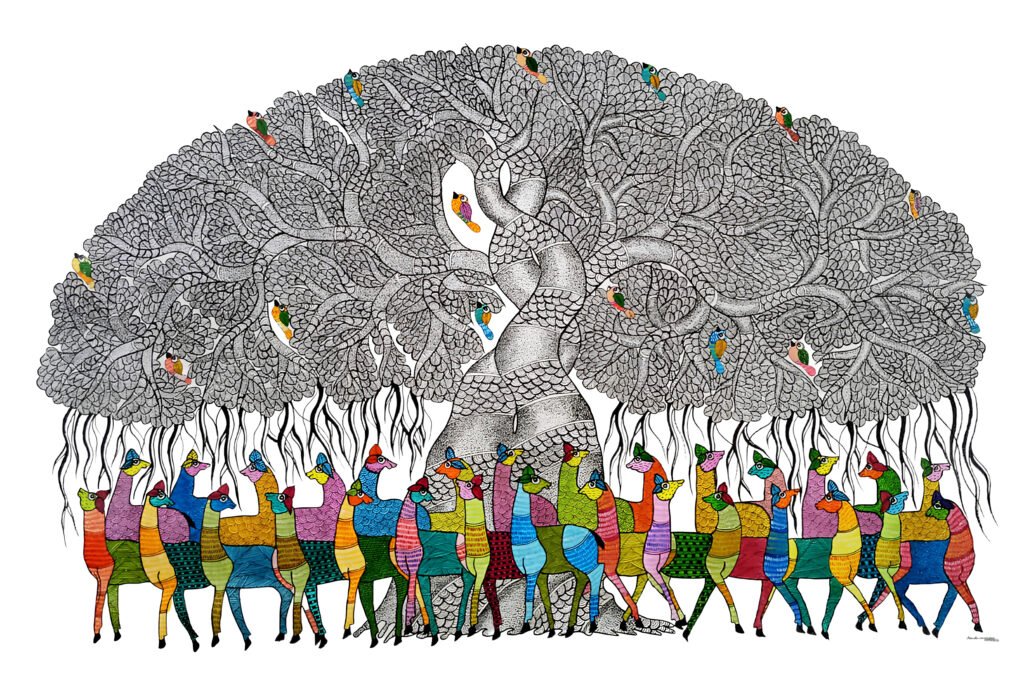
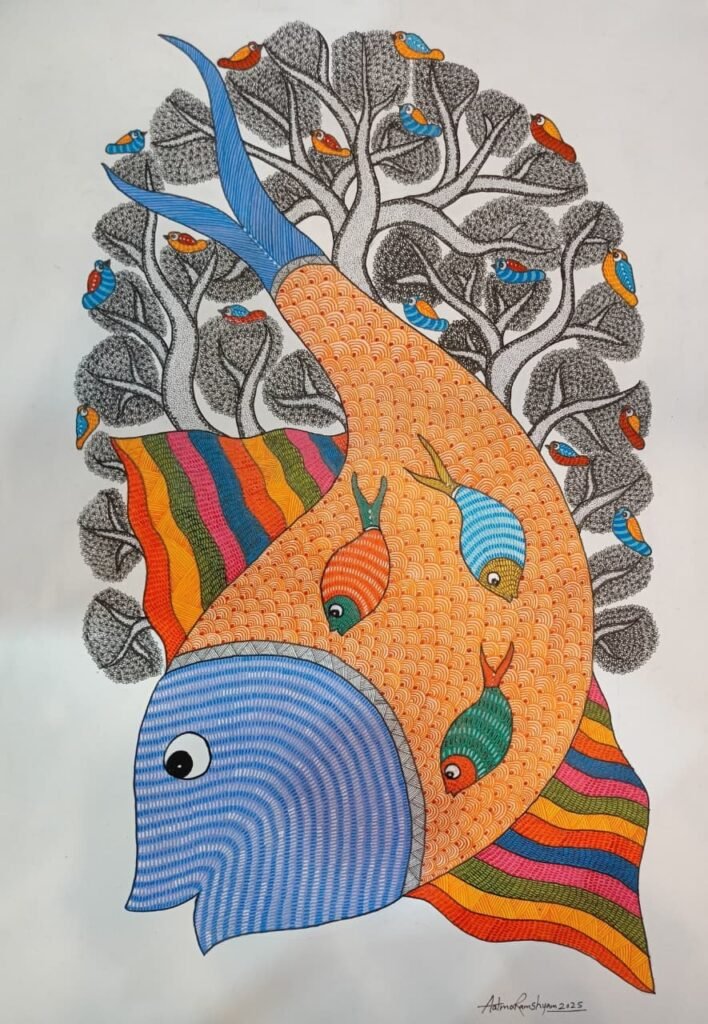
The easiest way to distinguish between the two lies in their treatment of form and texture. Gond art is celebrated for its intricate patterns and richly textured surfaces. Artists fill birds, animals, trees, and human figures with an elaborate vocabulary of parallel lines, fish-scale motifs, tiny curves, seed-like dashes, and flowing cross-hatched designs. These patterns are more than decorative elements; they create movement, rhythm, and a sense of life within every subject. Over time, many Gond artists develop their own signature style of pattern-making, making each artwork instantly recognizable.
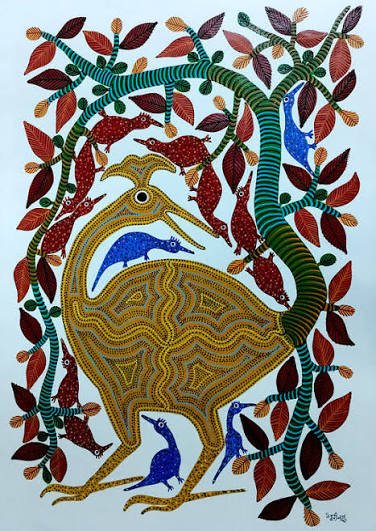
Bhil art, by contrast, is defined by its disciplined use of dots. Thousands of carefully placed, uniformly sized dots are arranged in rhythmic sequences that follow the contours of people, animals, and landscapes. This distinctive pointillist technique creates vibrant compositions while serving as a powerful cultural symbol. The dots are not simply an aesthetic choice—they are an integral part of the Bhil artistic identity.
The differences between the two traditions are also deeply rooted in the histories of the communities that created them. Gond art originates from the Gond tribe, one of India’s largest indigenous forest-dwelling communities. Their artistic tradition reflects an intimate relationship with forests, wildlife, and the belief that every living being possesses a spiritual essence. Gond paintings often depict mythical creatures, sacred trees, birds seamlessly merging with branches, and stories that express the interconnectedness of nature and humanity.
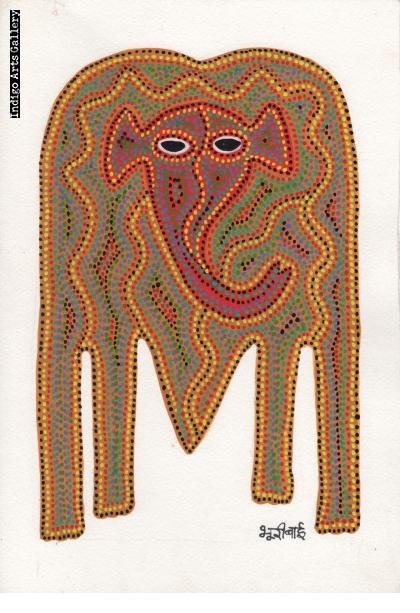
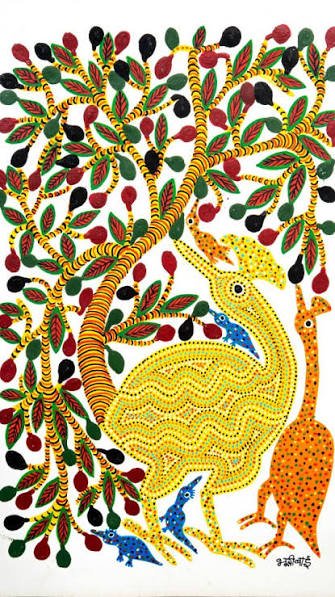
Bhil art belongs to the Bhil tribe, India’s second-largest tribal community, spread across Madhya Pradesh, Gujarat, Rajasthan, and Maharashtra. Their paintings are closely associated with agricultural life, seasonal cycles, village traditions, and ritual practices. Bhil artists frequently portray local deities, everyday rural life, livestock, harvest celebrations, and the iconic Pithora horse paintings, which are created as sacred offerings to express gratitude for prosperity and abundant harvests.
The symbolic meaning behind the artistic techniques further distinguishes these traditions. In Gond art, the flowing lines and intricate textures are believed to represent the vibrational energy, or bana, that exists within all living things. Every pattern conveys movement and life, reinforcing the Gond belief that nature is animated by an invisible spiritual force.
In Bhil art, however, the signature dots carry profound spiritual significance. They are closely associated with maize kernels, raindrops, seeds, and fertility—the elements that sustain agricultural life. Each dot may be understood as a symbolic prayer for rain, abundance, and the well-being of the community, reflecting the Bhil people’s enduring connection with the land.
Despite their distinct identities, both traditions share a remarkable journey into the contemporary art world. For generations, Gond and Bhil paintings were created on the mud walls and floors of village homes using natural pigments during festivals, rituals, and community ceremonies. During the late twentieth century, these ephemeral traditions found new life on paper and canvas, allowing indigenous artists to reach national and international audiences while preserving their cultural heritage.
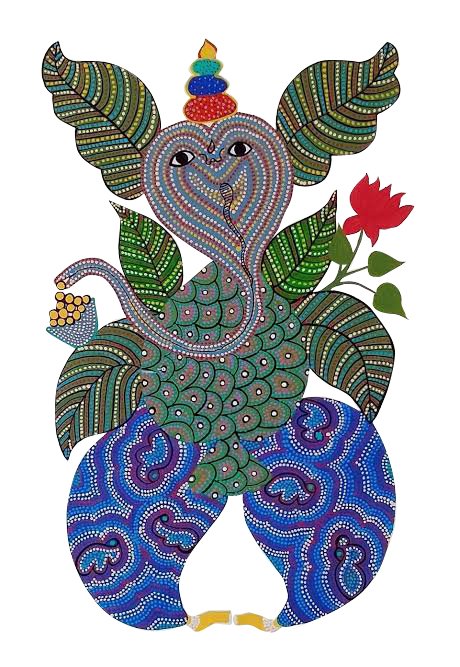
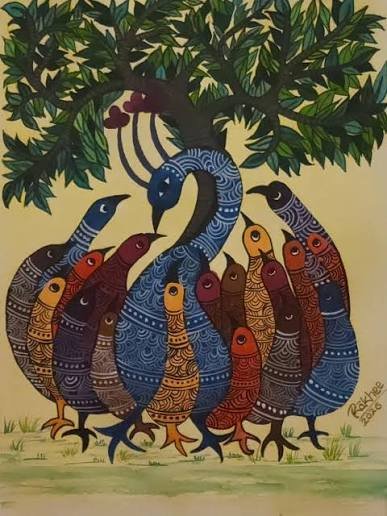
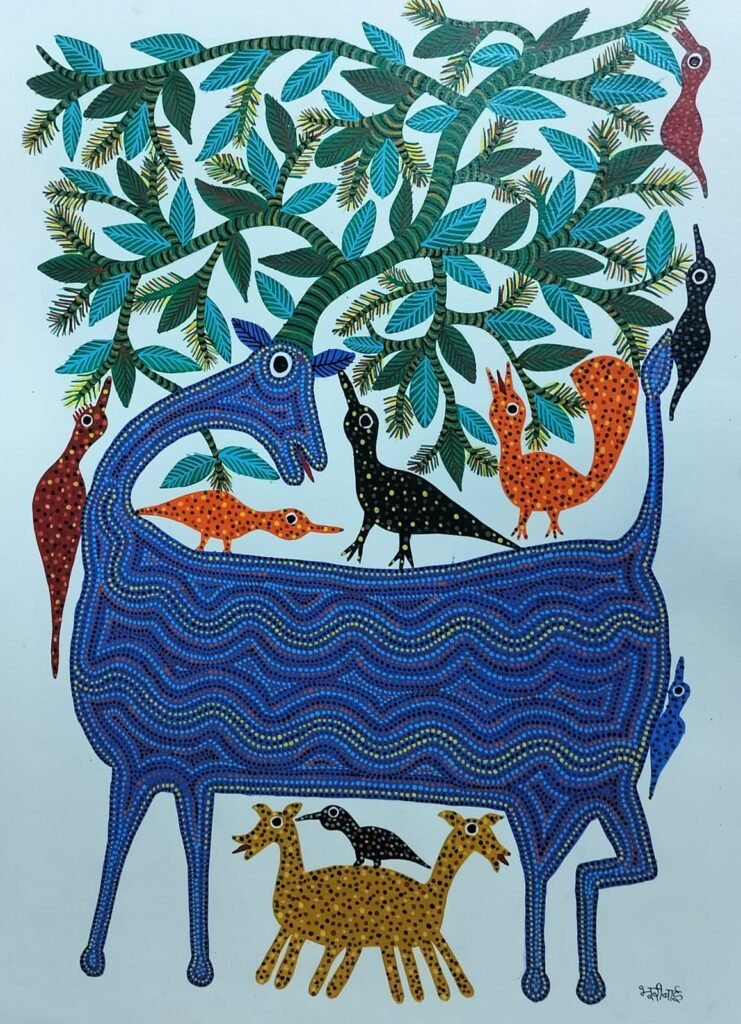
The modern Gond movement owes much to the pioneering work of Jangarh Singh Shyam, whose innovative vision transformed a traditional village art form into one of India’s most celebrated contemporary indigenous art movements. Similarly, Bhil artists such as Bhuri Bai and Lado Bai played a transformative role in adapting ritual wall paintings to canvas during the 1980s, helping establish Bhil art as an important voice within contemporary Indian art.
Although Gond and Bhil art share vibrant colours, tribal origins, and a profound reverence for nature, they should never be viewed as interchangeable traditions. Gond paintings breathe with intricate textures that evoke the living spirit of the forest, while Bhil paintings come alive through thousands of rhythmic dots that celebrate fertility, faith, and agricultural life. Each tradition tells its own story, shaped by generations of cultural memory and artistic innovation.
Understanding these differences allows viewers to appreciate the remarkable diversity of India’s indigenous artistic heritage. Every line in a Gond painting and every dot in a Bhil composition carries centuries of history, belief, and creativity, making both traditions invaluable expressions of India’s living cultural legacy.