A photographic journey through the landscapes, wildlife and living history of Jim Corbett Tiger Reserve
By Lalit Rajora
There are forests where wildlife can be seen, and there are forests where wildlife can be felt. Corbett belongs to the second kind.
At the foothills of the Himalaya, where the mountains descend into the Terai and rivers cut through forests and grasslands, lies one of India’s most celebrated wildernesses—Corbett Tiger Reserve. Spread across a remarkable mosaic of sal forests, riverine woodland, open chaurs, hills, ravines and water bodies, Corbett is much more than a destination for tiger sightings. It is a landscape shaped by water, forest, fire, wildlife and people—and by a history that goes back almost a century.
Today the reserve covers about 1,288 sq km, comprising Corbett National Park, Sonanadi Wildlife Sanctuary and surrounding reserve forests. Its landscape supports an extraordinary diversity of life, with more than 600 recorded plant species, around 50 mammal species and more than 580 species of birds.
A forest born from conservation
The story of Corbett begins long before it became a famous tiger destination.
During the early decades of the twentieth century, growing concern about the destruction of forests and wildlife led to proposals for protecting this landscape. In 1936, an area of 323.75 sq km was formally declared Hailey National Park, named after Sir Malcolm Hailey, the Governor of the United Provinces. It became India’s first national park.
After Independence, the park was renamed Ramganga National Park in the mid-1950s. It was subsequently renamed Corbett National Park, in memory of Jim Corbett—the legendary hunter, naturalist, author and conservationist whose intimate knowledge of the forests and wildlife of Kumaon and the surrounding region had contributed to the creation and protection of the park.
But perhaps the most important chapter in Corbett’s history came in 1973, when India launched Project Tiger here. Corbett was one of the original nine tiger reserves selected for the programme and became the symbolic starting point of India’s modern tiger-conservation movement.
The reserve we see today is therefore not simply a protected forest. It represents the evolution of India’s conservation philosophy—from protecting a small national park to managing an interconnected landscape of forests, rivers, grasslands and wildlife habitats.
Dhikala: the heart of the Corbett landscape
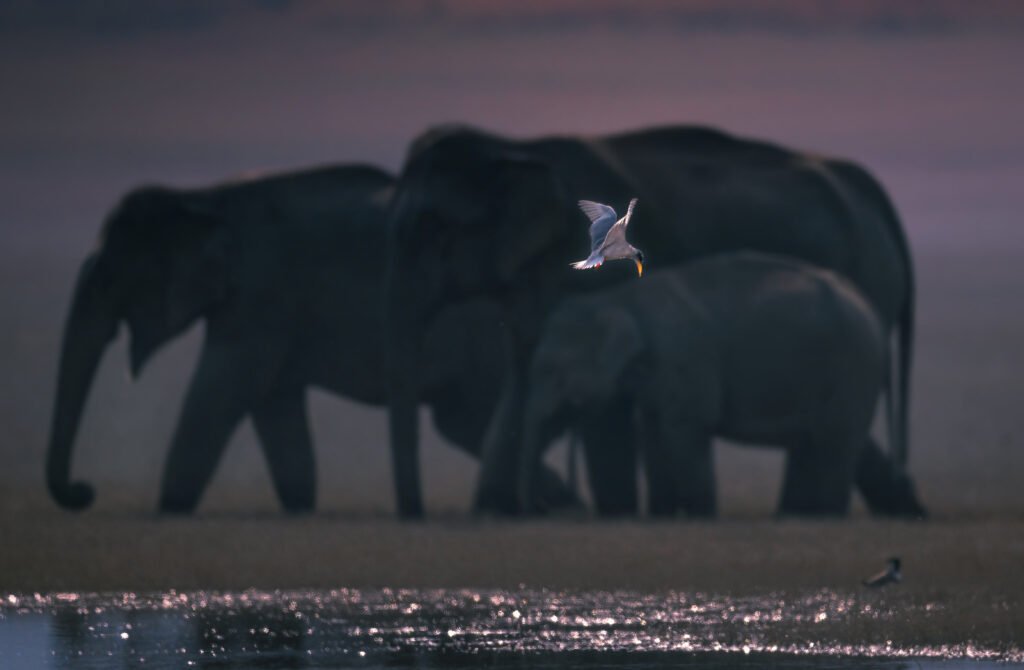
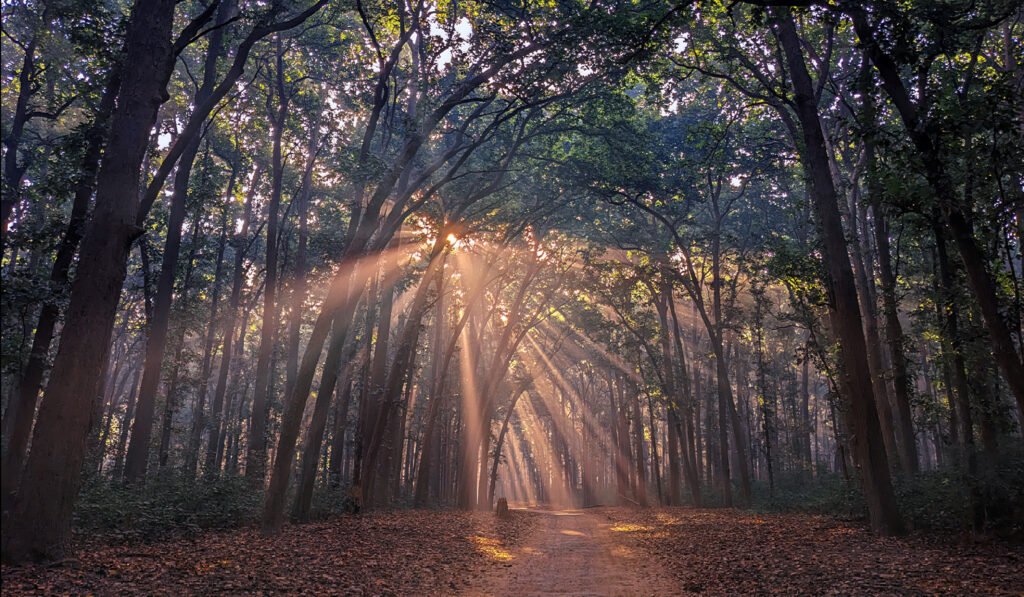
For many visitors, the name Corbett immediately evokes Dhikala.
Located deep inside the national park, Dhikala is famous for its sweeping grasslands, forests and views towards the surrounding hills. The broad open chaurs provide an extraordinary contrast to the dense sal forests. They are also important feeding grounds for deer and elephants and create the open spaces in which predators can occasionally be observed.
The largest of Corbett’s grasslands is Dhikala Chaur. Historically, several other grasslands—including Buxar Chaur and Beri Chaur—were altered when the Ramganga reservoir was created. Later, relocation of villages such as Dhara, Jhirna and Kothirau created opportunities for additional grassland habitat management.
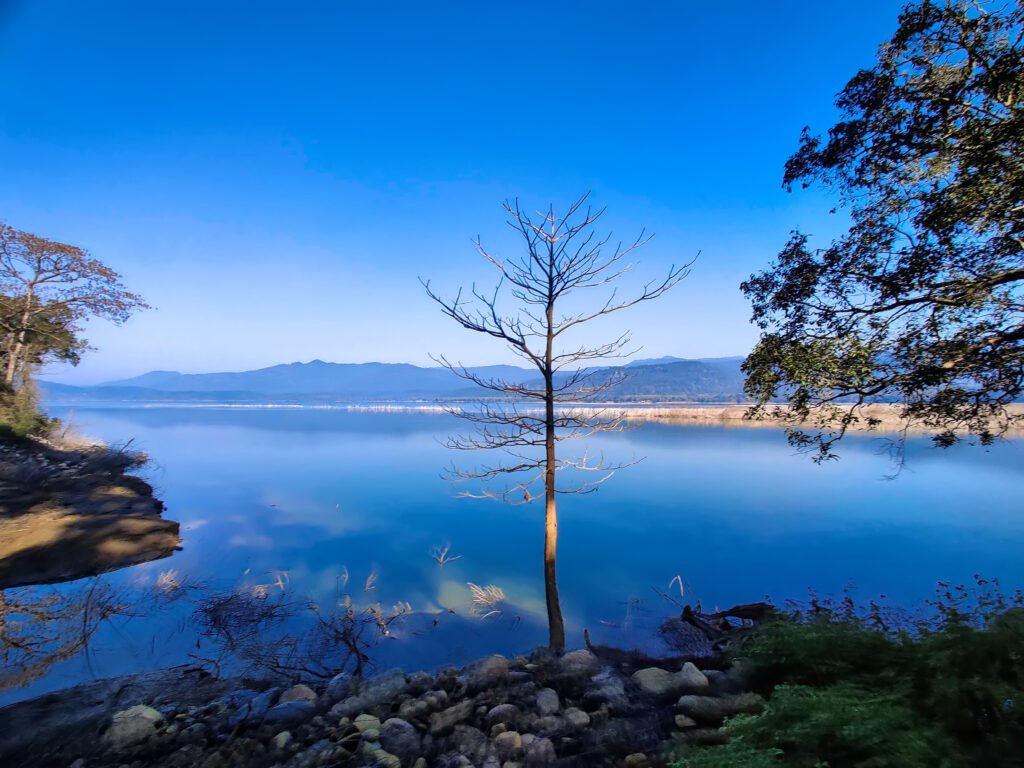
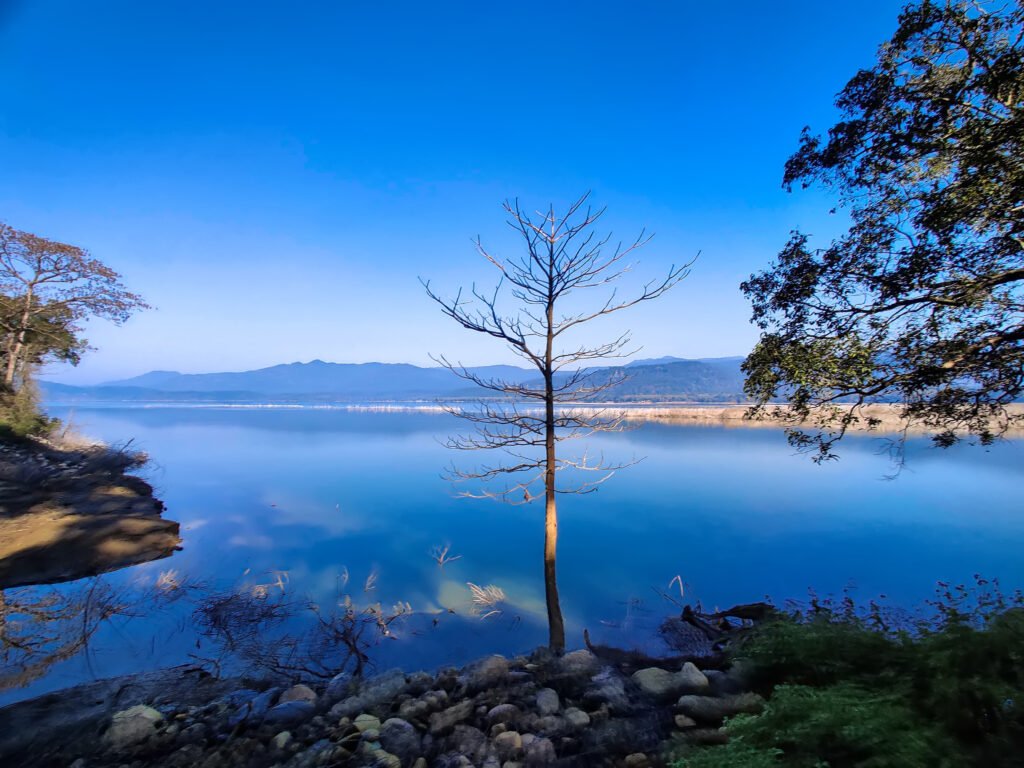
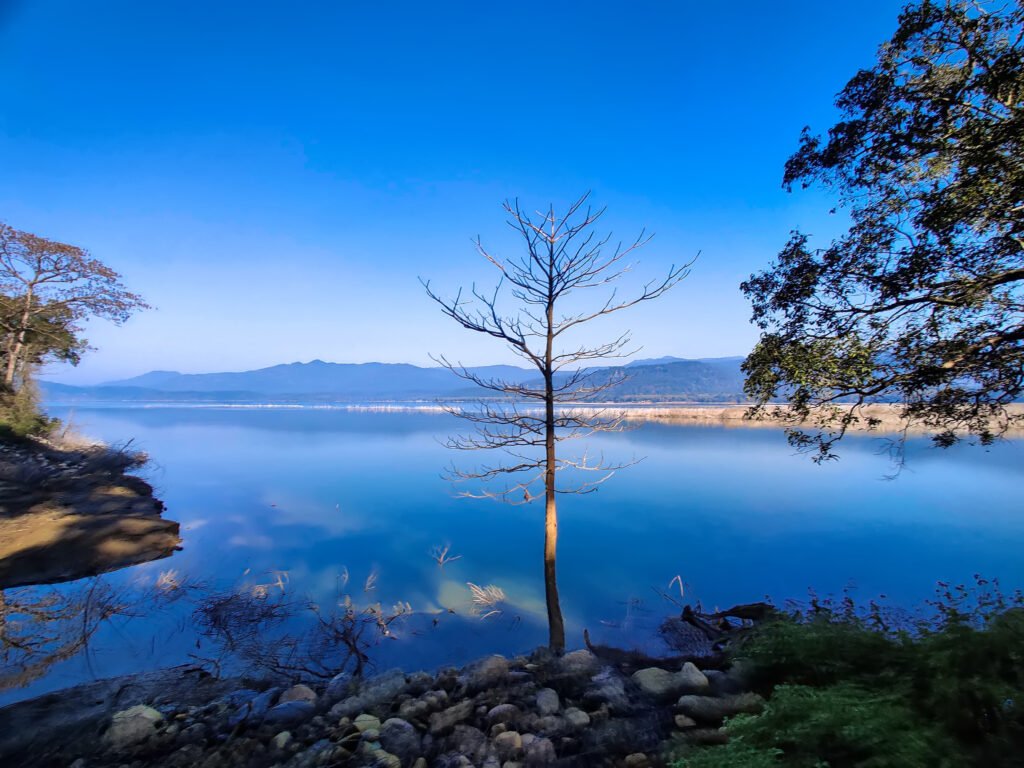
Dhikala is also inseparable from the Ramganga. From the lodge and surrounding grasslands, the river and reservoir become an essential visual and ecological element of the landscape.
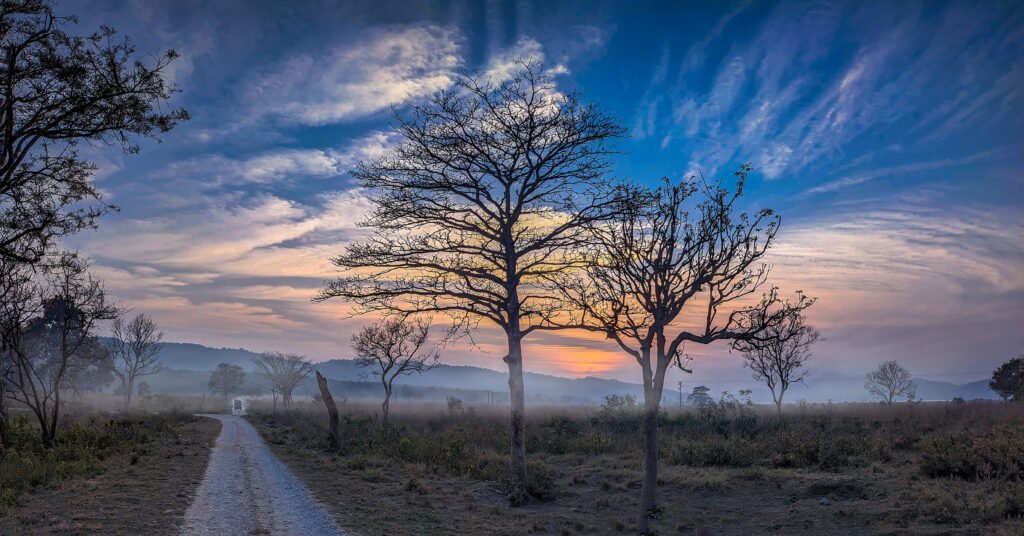
My photographs of this region reveal that Corbett’s beauty does not depend upon a single dramatic subject. Sometimes it is a solitary elephant walking across an open meadow, sometimes a dead tree silhouetted against distant hills, and sometimes the quiet architecture of a forest lodge surrounded by enormous trees.
The landscape itself is the story.
The Ramganga: the lifeline of Corbett
If the tiger is the symbol of Corbett, the Ramganga River is its lifeline.
The river and its tributaries—including the Sonanadi, Palain and Mandal—form an important hydrological network across the reserve. The Kosi, flowing along the eastern side of the park, is another major river influencing the surrounding landscape. These water systems provide drinking water, shape vegetation and create habitat for aquatic and terrestrial wildlife.
Along the riverbanks, vegetation changes dramatically. Moist riverine habitats support species such as shisham and khair, while extensive stretches of tall elephant grass create dense cover. The transition between water, grassland and forest is particularly important for large herbivores and predators.
During the dry season, water becomes an even more powerful force. Animals concentrate around rivers, pools and remaining water sources, increasing the ecological importance of every stream and wetland.
The Ramganga is therefore more than a scenic element in a photograph. It is one of the forces that has created Corbett’s biodiversity.
A landscape of forests and grasslands
Corbett’s vegetation is remarkably varied.
The dominant sal forests create the characteristic character of many parts of the reserve, but they exist alongside moist and dry deciduous forests, riverine vegetation, sissoo-khair woodland, bamboo brakes and open grasslands. The reserve also contains Himalayan subtropical pine habitats in its higher areas.
This diversity of vegetation creates a diversity of habitats.
A tiger moving through tall grass experiences a very different world from an elephant travelling through a riverbed. A leopard may disappear into a rocky hillside, while a kingfisher hunts from a branch above a stream. Chital and sambar graze in open country; langurs occupy the forest canopy; crocodilians and fish inhabit the waterways.
Corbett’s real strength is therefore not simply the number of species it contains, but the continuum of habitats that allows those species to coexist.
The tiger’s kingdom
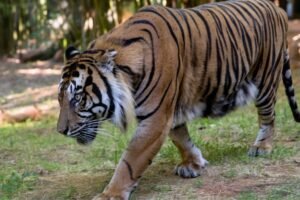
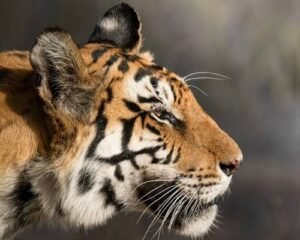
The Bengal tiger remains the undisputed icon of Corbett.
Yet photographing a tiger here is rarely a matter of simply entering the forest and finding one. Corbett’s dense vegetation gives the tiger an extraordinary advantage. A large animal can move through the landscape almost invisibly, leaving behind only clues—a pugmark in soft earth, alarm calls from deer, suddenly agitated langurs or the silence that falls over a forest track.
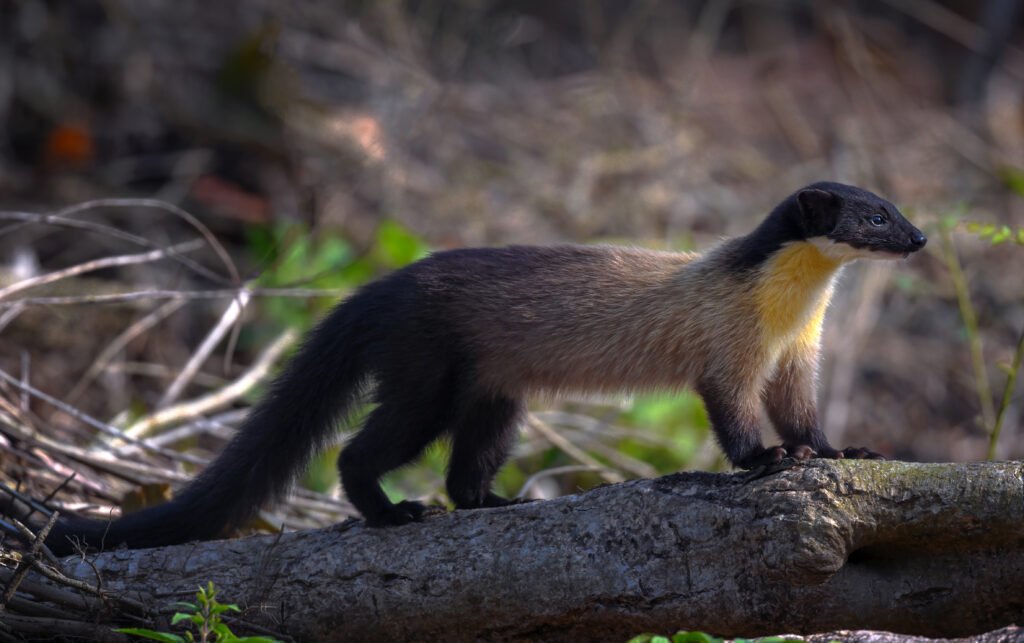
The abundance of prey, water and cover makes the reserve an important tiger habitat. Tigers share this landscape with leopards, elephants, sambar, chital, barking deer, hog deer, wild boar, langurs and numerous smaller mammals.
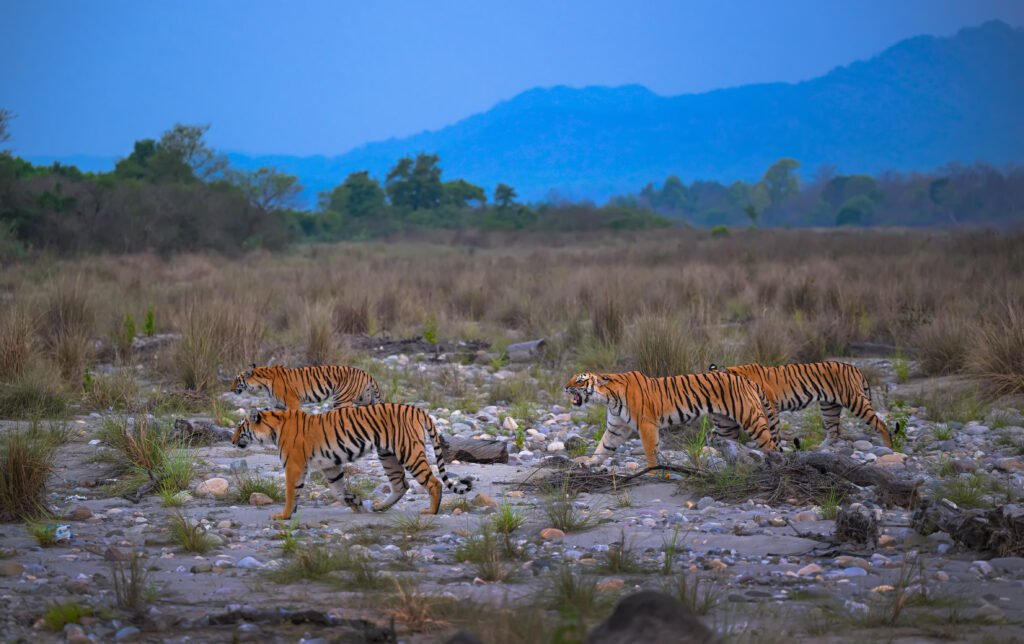
One of the most striking experiences is seeing several tigers together in an open riverbed or grassland. My photograph of four tigers walking across a stony landscape captures something essential about Corbett: even when the animals are the main subject, their surroundings remain an equally important part of the image.
The river stones, tall grasses, distant hills and fading light tell us where these tigers live—and why this habitat matters.
The elephant and the open country
The Asian elephant is another defining presence in Corbett.
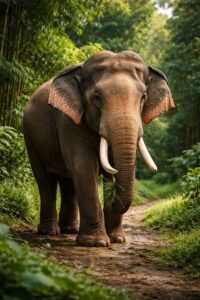
Elephants move between forest, grassland and riverine habitats, sometimes appearing suddenly from dense vegetation and sometimes crossing vast open spaces. A lone bull walking across a meadow can look almost insignificant against the scale of the landscape, yet the animal represents one of the largest and most ecologically influential mammals of the Terai.
My photograph of an elephant crossing the grassland, with the forested hills and a forest building behind it, is a reminder that Corbett’s wildlife and human history are often visible in the same frame.
The old forest infrastructure, the river valley and the animal are all part of one landscape.
A paradise for birds
Corbett is equally remarkable in the air.
More than 580 species of resident and migratory birds have been recorded in the reserve, making it one of India’s important bird habitats. The combination of river, woodland, grassland and hills provides a remarkable range of ecological niches.
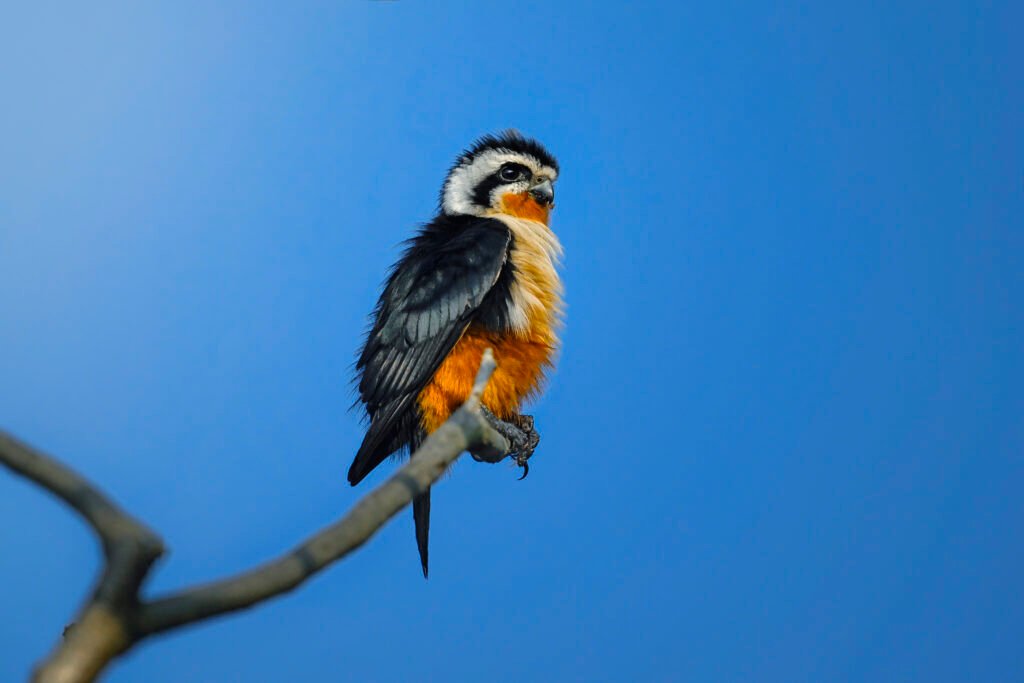
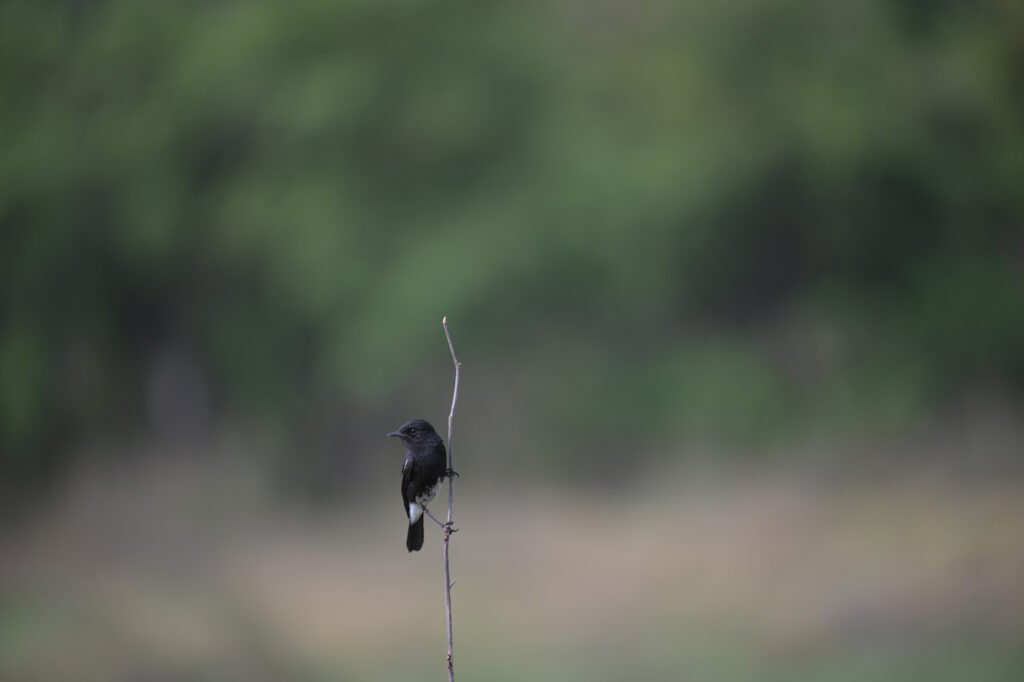
The bird photograph in this story shows the character of Corbett’s avifauna beautifully: a small, vividly coloured bird perched against an enormous expanse of blue sky. Such moments demonstrate why wildlife photography in Corbett is not only about the large mammals.
From raptors and kingfishers to hornbills, woodpeckers, parakeets and forest songbirds, the reserve’s birdlife adds another layer to the forest’s soundscape.
For a photographer, these smaller subjects demand a different approach—patience, careful observation and an understanding of light and behaviour.
Beyond the famous zones
Although Dhikala is perhaps the best-known tourism landscape, Corbett is much larger and more varied.
The tourism zones include Dhikala, Bijrani, Jhirna, Dhela, Durgadevi, Sonanadi, Pakhro and Garjia, each offering a somewhat different combination of forest, grassland, hills and water. The official reserve currently lists these zones with separate access arrangements and seasonal schedules.
Bijrani is known for its open forest and grassland landscapes. Jhirna and Dhela offer a different forest experience, while Durgadevi takes visitors towards more mountainous country and is particularly attractive for birdwatchers. Sonanadi extends the protected landscape towards the southern side of the reserve.
Beyond the core tourist experience lie the surrounding forests and buffer landscapes, including the Pawalgarh Conservation Reserve, Sitabani landscape and forests around Ramnagar. These adjoining habitats are important because wildlife does not recognise the administrative boundaries drawn by humans.
A tiger, elephant or leopard may use several connected forest blocks during its lifetime. Conservation therefore depends upon maintaining the larger landscape rather than protecting isolated islands of forest.
Corbett’s surrounding landscape
The journey to Corbett is itself part of the experience.
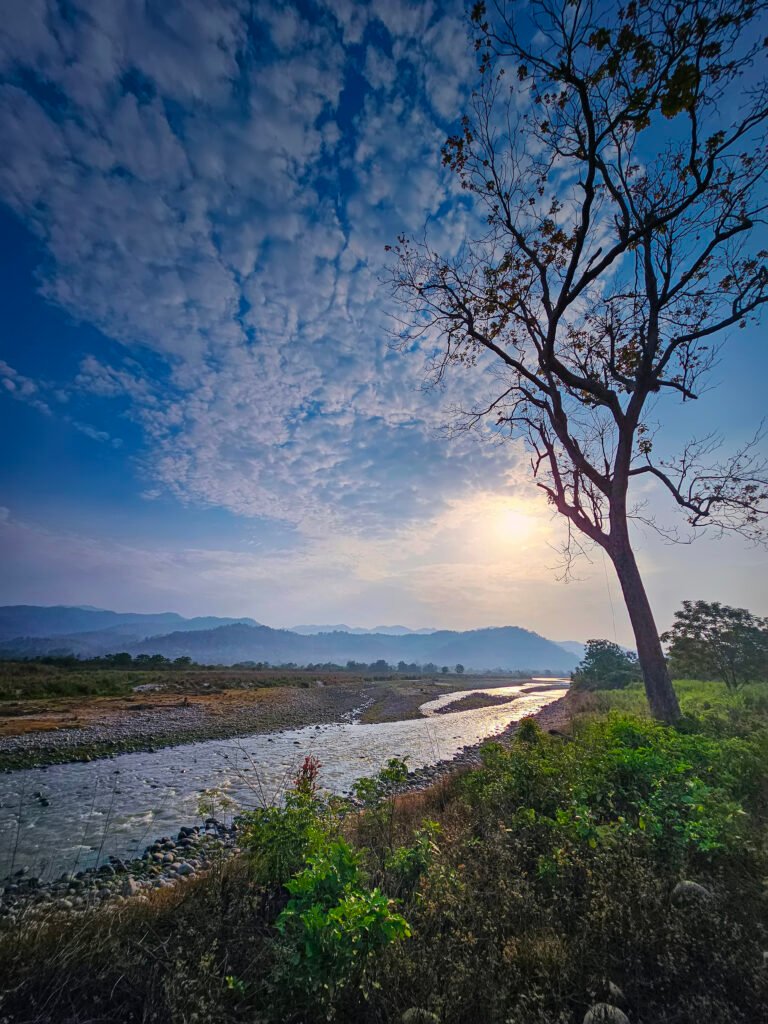
The town of Ramnagar serves as the principal gateway, while the forests extend towards the Himalayan foothills and the Terai. Rivers, agricultural land, forest corridors and human settlements exist alongside one another.
This proximity creates both opportunity and challenge.
Corbett supports wildlife tourism, local employment and a powerful conservation economy, but it also sits within a landscape where people and wild animals sometimes compete for space and resources. The future of Corbett will depend increasingly upon coexistence—protecting corridors, reducing conflict, maintaining water sources and ensuring that tourism remains compatible with ecological limits.
A forest written in layers
Perhaps the most compelling thing about Corbett is that no single photograph can explain it.
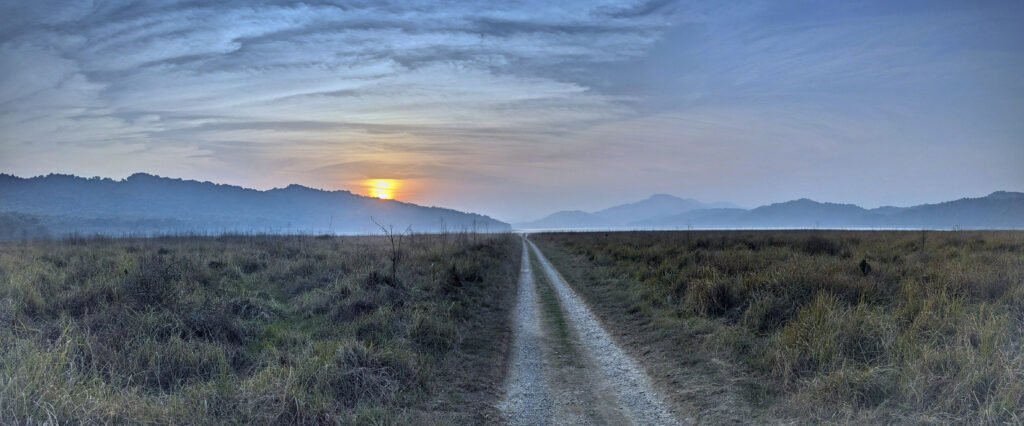
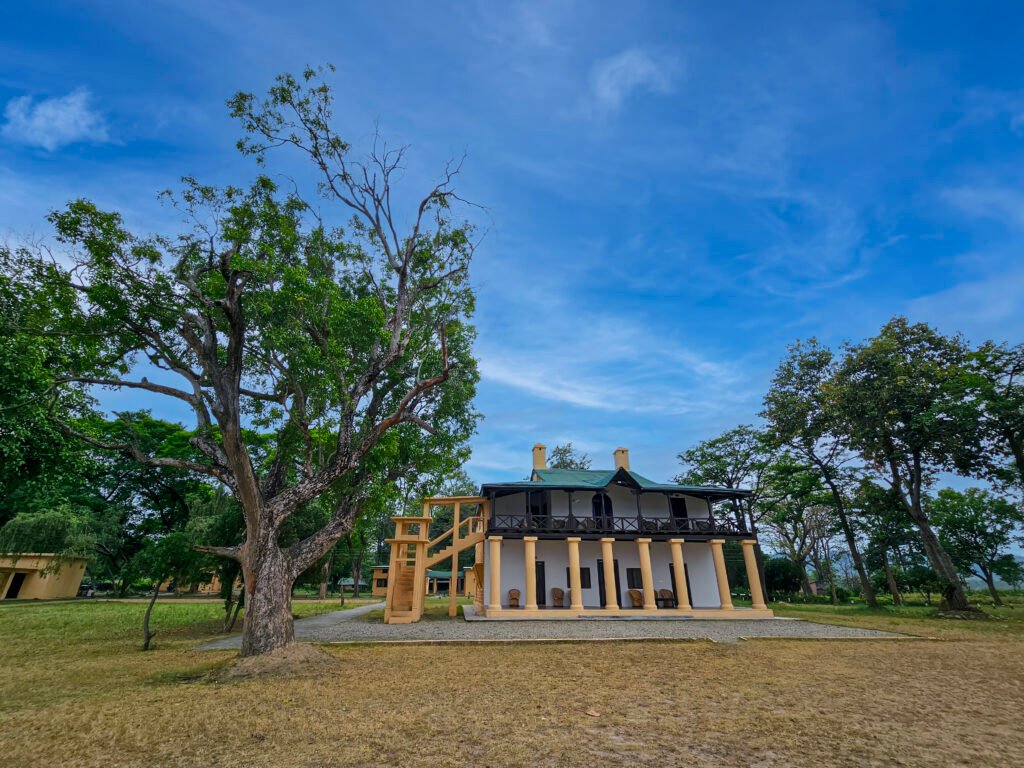
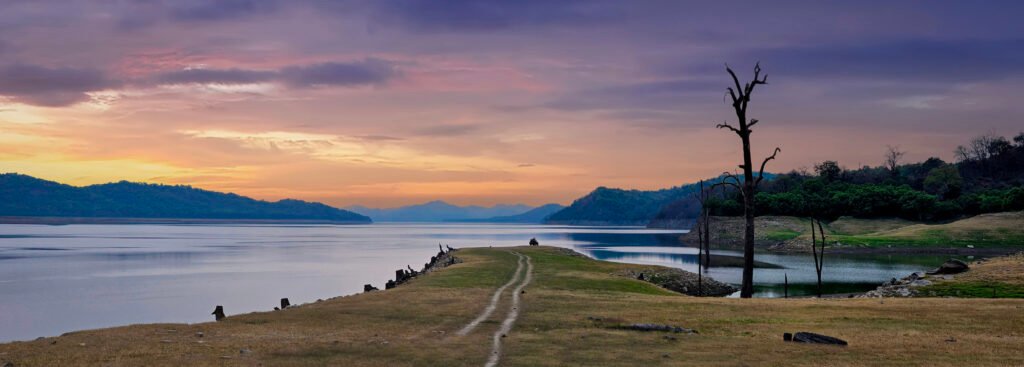
One frame shows a grand old tree beside a forest building. Another opens into the still waters of a reservoir beneath a dramatic evening sky. A bird occupies only a small portion of another image, yet dominates the frame through colour and character. An elephant crosses an immense meadow. Four tigers walk together across a riverbed. And in another photograph, trees stand like silhouettes against distant Himalayan ridges.
Together, these images form a portrait of Corbett.
They show a place where history and wilderness coexist; where a building associated with the forest administration can stand beneath ancient trees; where a river can determine the movement of animals; where grasslands can be as important as forests; and where the tiger is only one part of a much larger ecological story.
The legacy of Corbett
Nearly ninety years after its creation, Corbett remains one of India’s most important conservation landscapes.
Its significance lies not merely in the tiger population or the possibility of a memorable wildlife sighting. Its importance lies in the entire system—the forests, grasslands, rivers, wetlands, mountains, herbivores, predators, birds, reptiles, fish and countless smaller organisms that together create a living ecosystem.
The name Jim Corbett carries a complicated history: he was once known as a hunter of man-eating tigers and leopards, but later became an advocate for wildlife and habitat protection. The national park that bears his name ultimately became one of the most important symbols of India’s transformation from a hunting culture towards modern wildlife conservation.
Today, when a tiger walks silently through the tall grass, an elephant crosses the Ramganga landscape, or a bird sits alone against the Himalayan sky, the significance of Corbett becomes clear.
This is not simply a forest that protects wildlife.
It is a landscape that protects an entire web of life. And perhaps that is the greatest story Corbett has to tell.