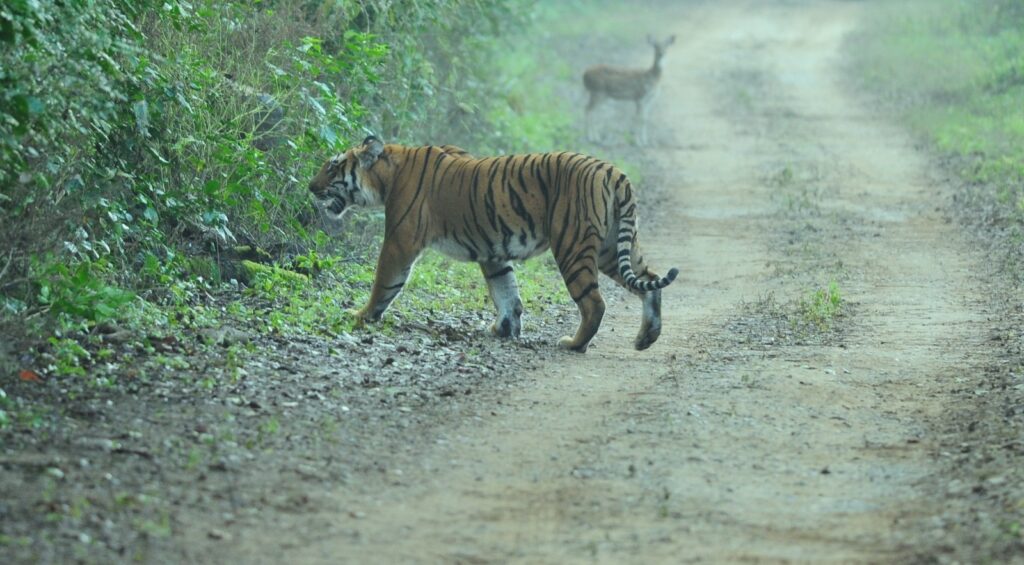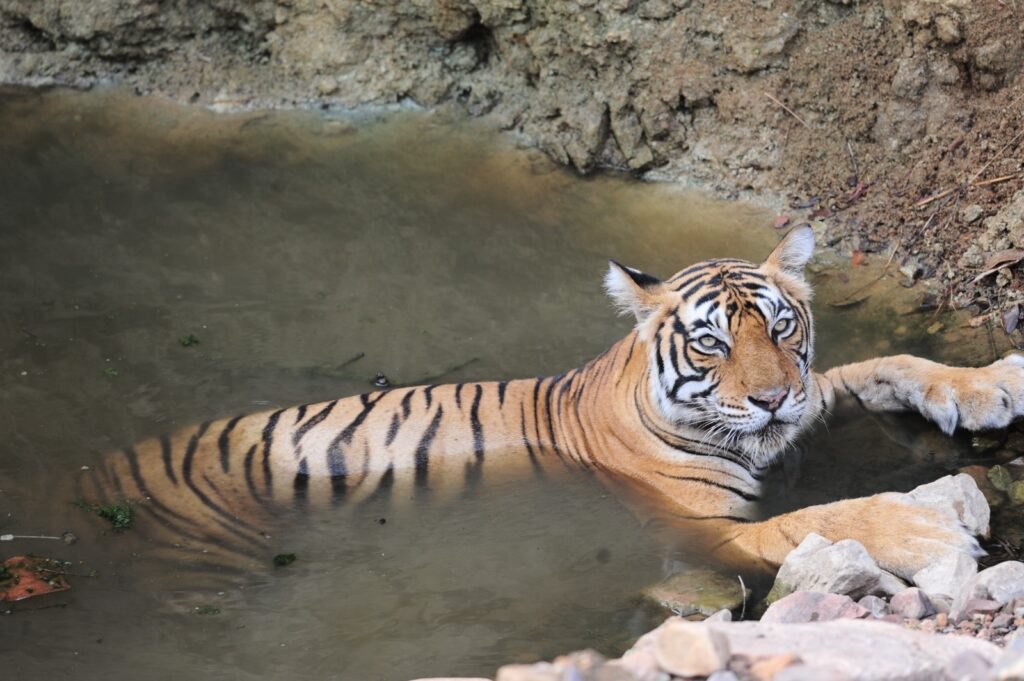

The spurt in tiger tourism is bringing in waves of troubles- for the tiger. The jump in the big cat population all across India, particularly during the past decade, is of course a welcome move, acknowledged and cheered by the Central Government after every tiger census.
The increase in tigers’ number has given a new lease of life to most national parks, be it Bandhavgarh & Kanha in Madhya Pradesh, Ranthambore in Rajasthan, Pilibhit in Uttar Pradesh, Corbett in Uttarakhand, Kaziranga in Assam or Nagarhole in Karnataka.
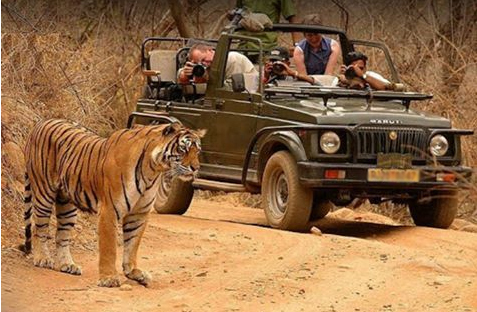
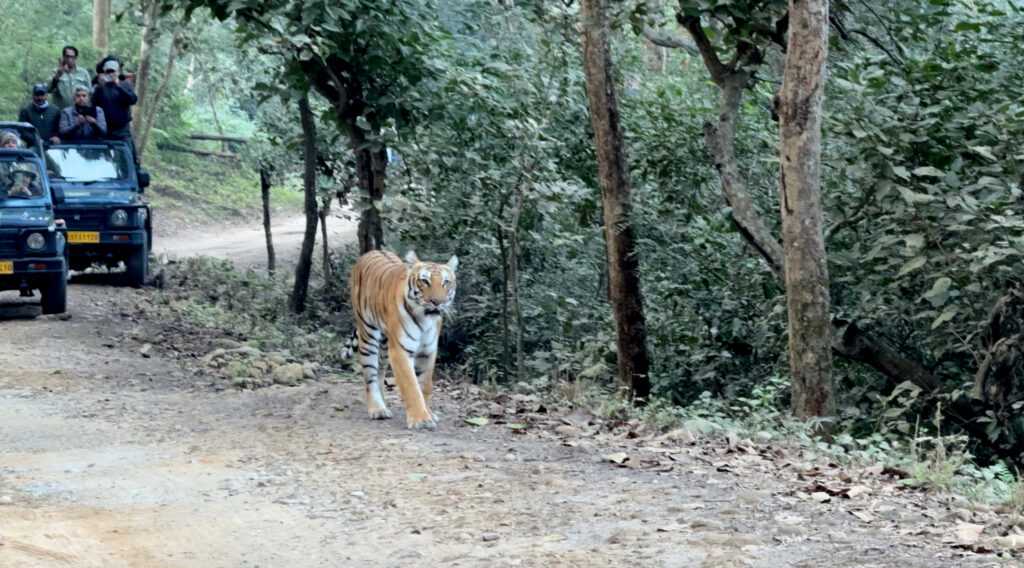
The situation has triggered a sharp increase in “tiger tourism’’. While the real beneficiaries of it are the resort owners, naturalists, Gypsy drivers and guides, it has put additional – and often tremendous – strain on the tigers. Tens of thousands of visitors and wildlife photographers throng to these places with just one objective: to have a tiger sighting or capture in in their cameras.
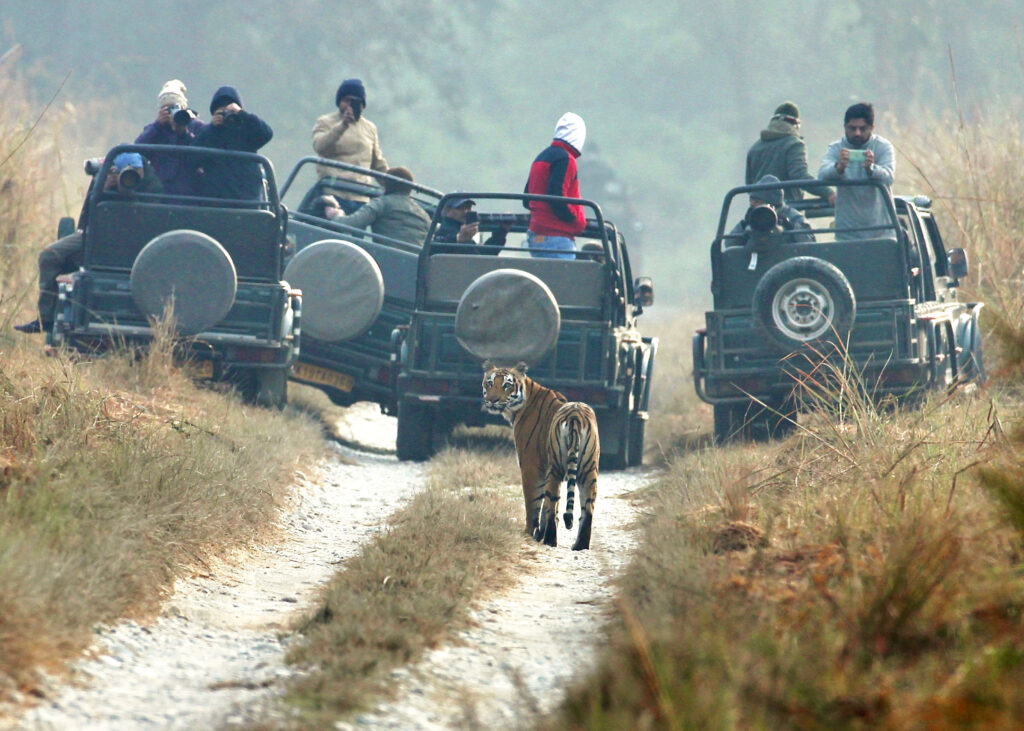
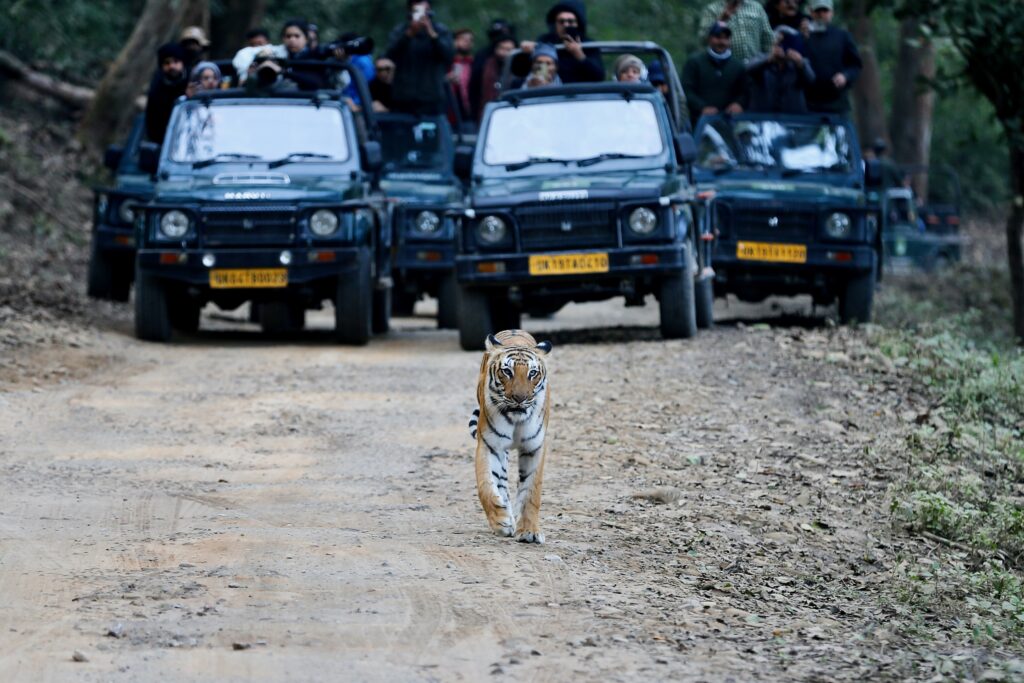
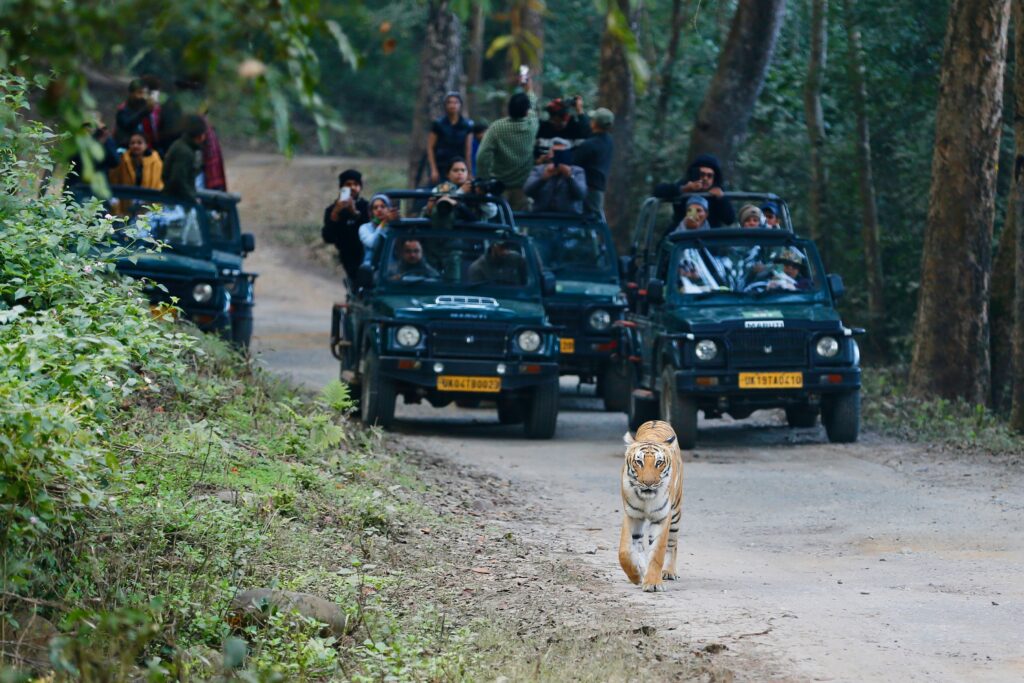
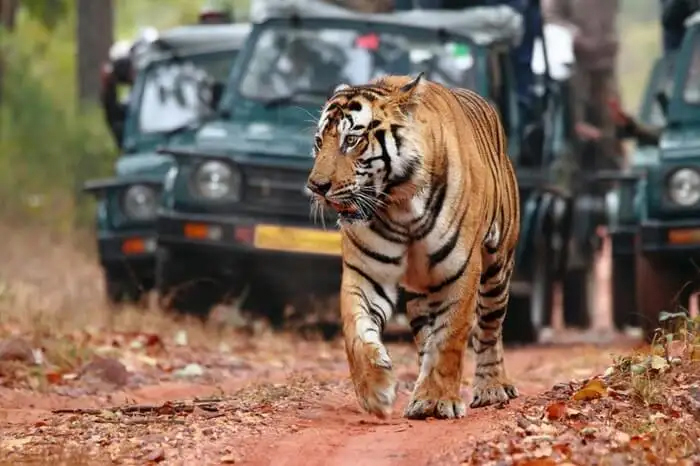
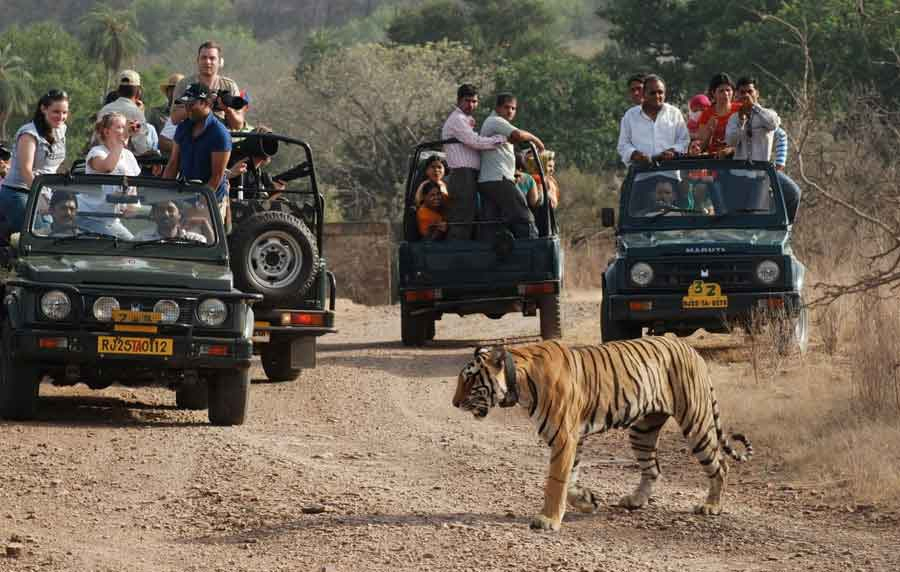
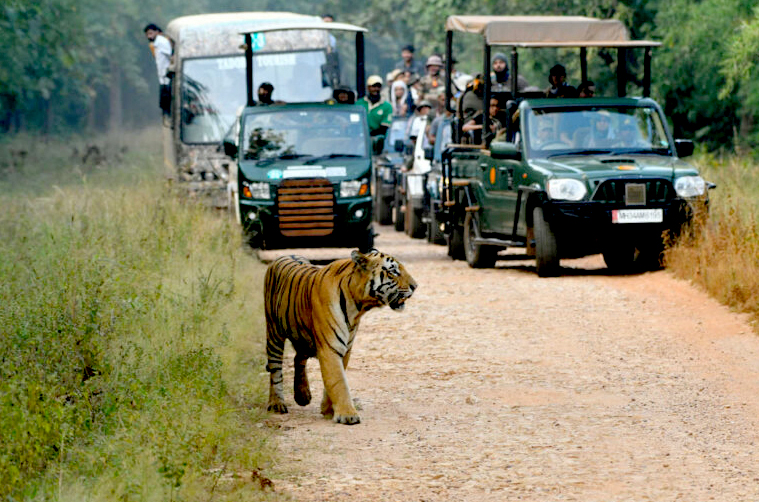
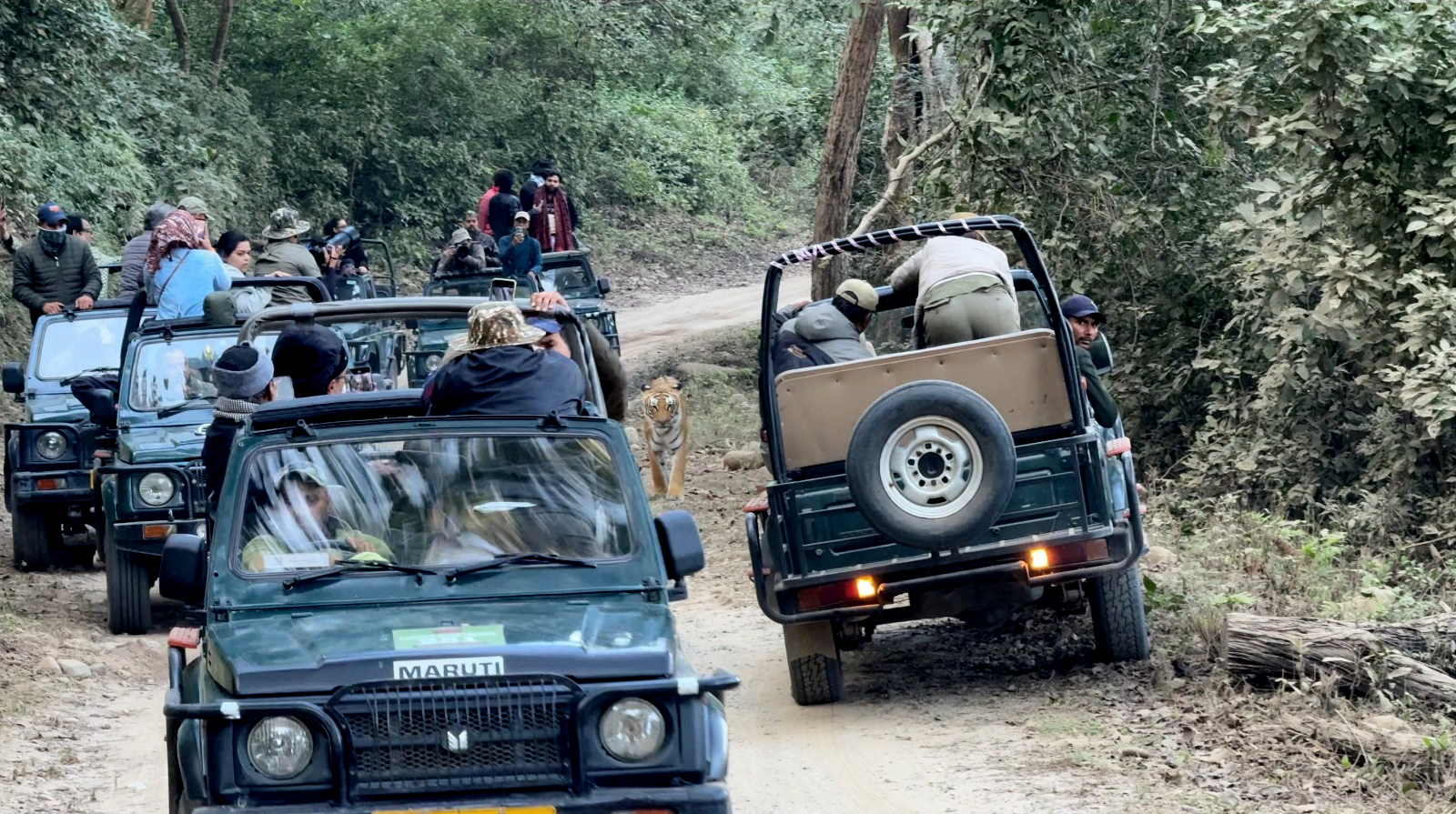
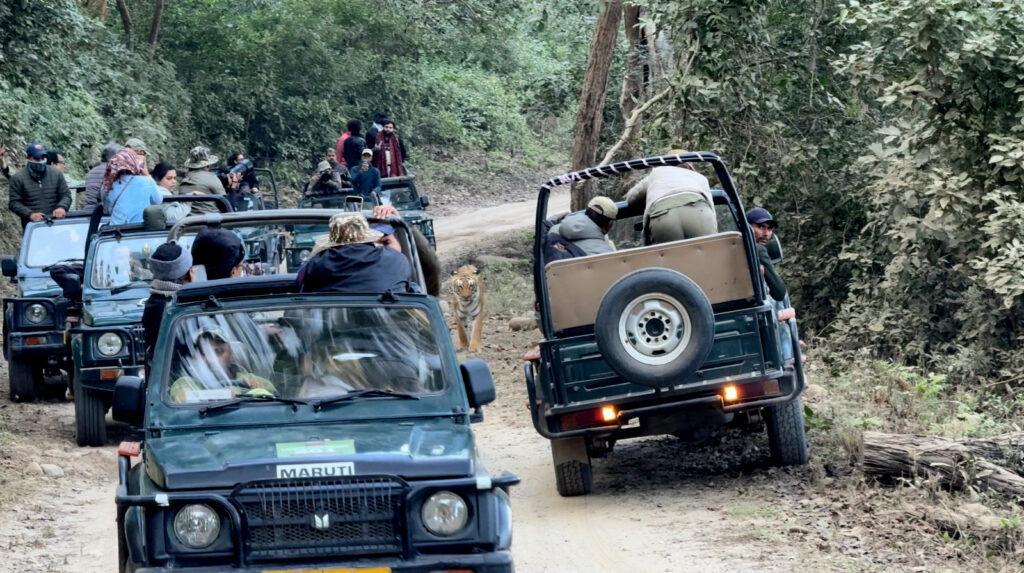
Therefore, what you witnesses in the protected forest is not always a pretty sight. Dozens of Gypsies and canters chasing a tiger at breakneck speed, regularly “gheraoing’’ it satisfy the photographic-lust of the visitors has become a norm.
So much so that the Supreme Court had to step in. Following it’s recent directive, many national parks including Tadoba,
Corbett and Ranthambore have banned the use of mobile phones during jungle safaris. As was happening, immediately after a tiger was spotted at a particular location, the Gypsy drivers or guides would call the other vehicles and wishin minutes the poor animal would find itself surrounded by dozens of vehicles.
There have been dozens of videos on social media where a tiger finds itself virtually trapped by Gypies.
After the Supreme Court ruling, it’s hoped that stopping the use of mobile would ease of considerable pressure from the tiger.
A recent video from Ranthambore showed a cornered tiger getting visibly angry, even baring its canines, when it’s movement was stopped by the vehicles.
For all you know, the situation could have taken a dangerous turn- for the visitors.
The fact is that the tiger has started experiencing different kinds of pressures. While their numbers have increased significantly inside the tiger reserves, the size of the forest where they live remains more or less the same. The tiger being a territorial animal, it does not tolerate the presence of another tiger in its territory.
As long as the tiger density was low, there was not mch problem for tigers. After the territorial fight between the two tigers, the loser would simply leave the forest and make its territory in another place.
But now, there is not enough territory left in the forest- and the tigers who lose the territorial battles have no no choice but
to come out of the forest. And here lies the problem. Most buffer zones are nothing but degraded forest, devoid of sufficient prey base for the new arrival. This automatically leads to more human- tiger conflict, with disastrous results for the both.
Areas around Pilibhit and Tadoba have been witnessing this conflict for last many years.
But rest assured, if no remedial measures (such as setting up tiger corridors) are taken, India’s most magnificent creature will continue to suffer at the hands of humans.
Five decades ago, the Central Government led by Indira Gandhi had launched Project Tiger. It pulled the big cat out of the jaws of almost certain extinction. Now another equally big step is needed- to make the tiger feel safe and comfortable in India.