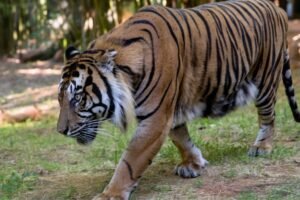
A forest rich in prey but empty of resident tigers reveals a deeper conservation crisis, where broken corridors, expanding infrastructure and unresolved human rights issues collide with the ambition to restore one of India’s most iconic predators.
By Sudhir J Kumar
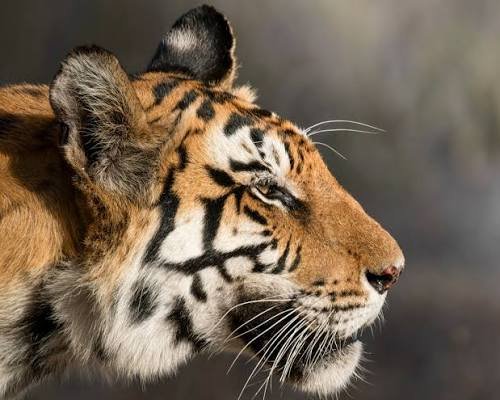
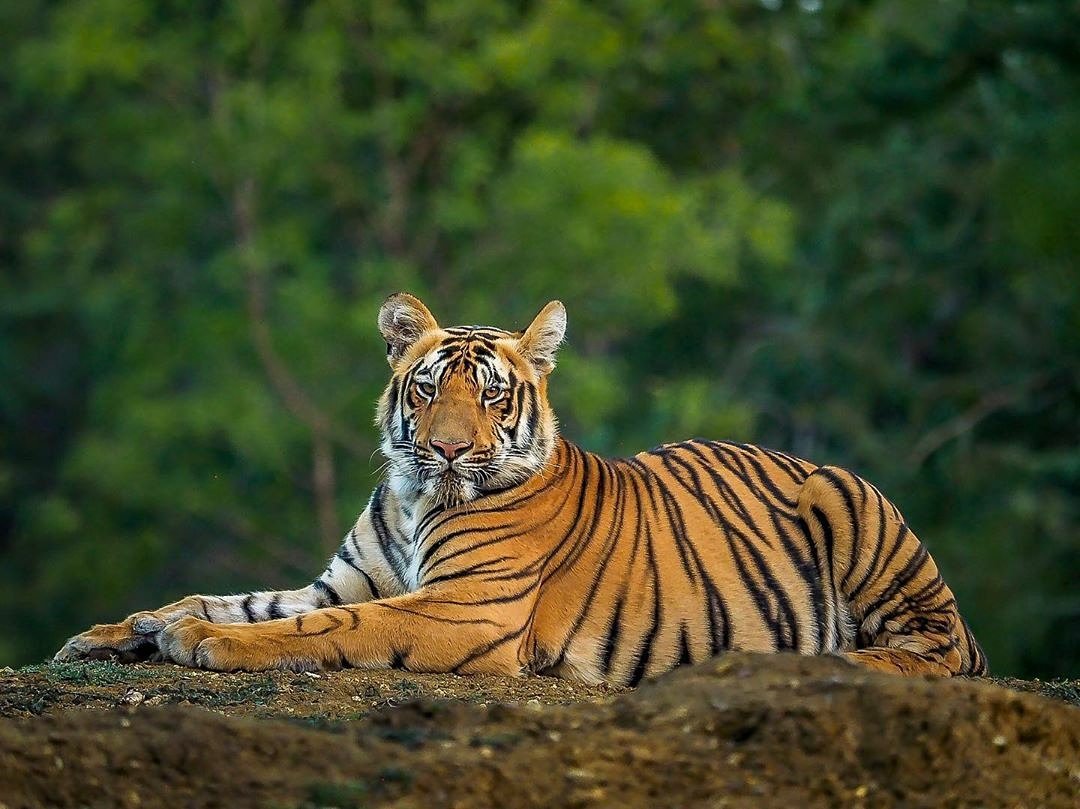
Deep in northern Telangana, the forests of Kawal stretch across a landscape of teak, bamboo and riverine wilderness. Near the Godavari, the reserve occupies a strategically important position in the Deccan’s tiger landscape.
On a map, Kawal appears almost perfectly placed.
To the west lies Maharashtra’s Tadoba-Andhari Tiger Reserve. To the east is Indravati in Chhattisgarh. Forest corridors connect these larger tiger populations with the forests of Telangana, creating the possibility of movement across one of central India’s most important wildlife landscapes.
Inside Kawal, the forest has much of what a tiger needs. Spotted deer, sambar, nilgai and wild pigs are present in significant numbers. Leopards and wild dogs occupy the same ecosystem.
Yet there is one striking absence.
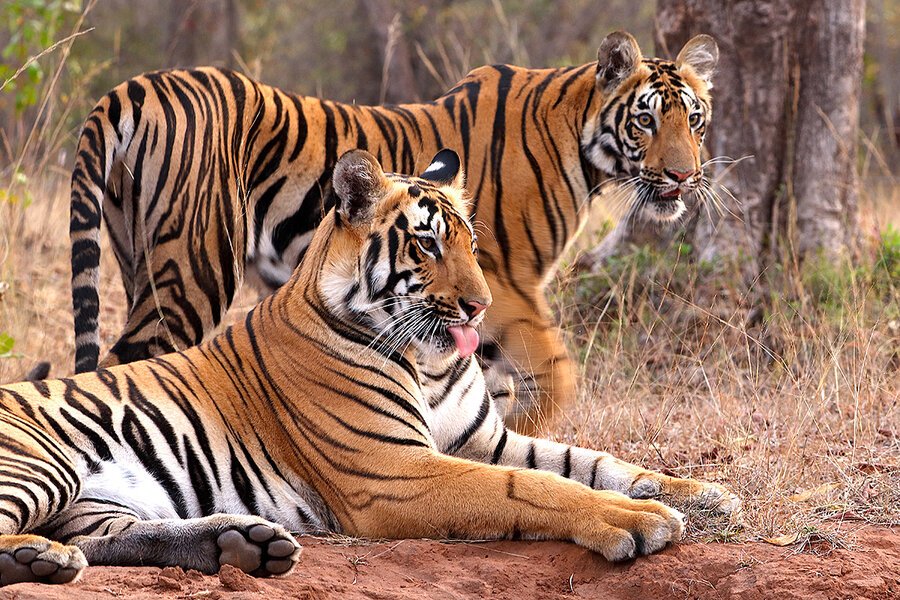
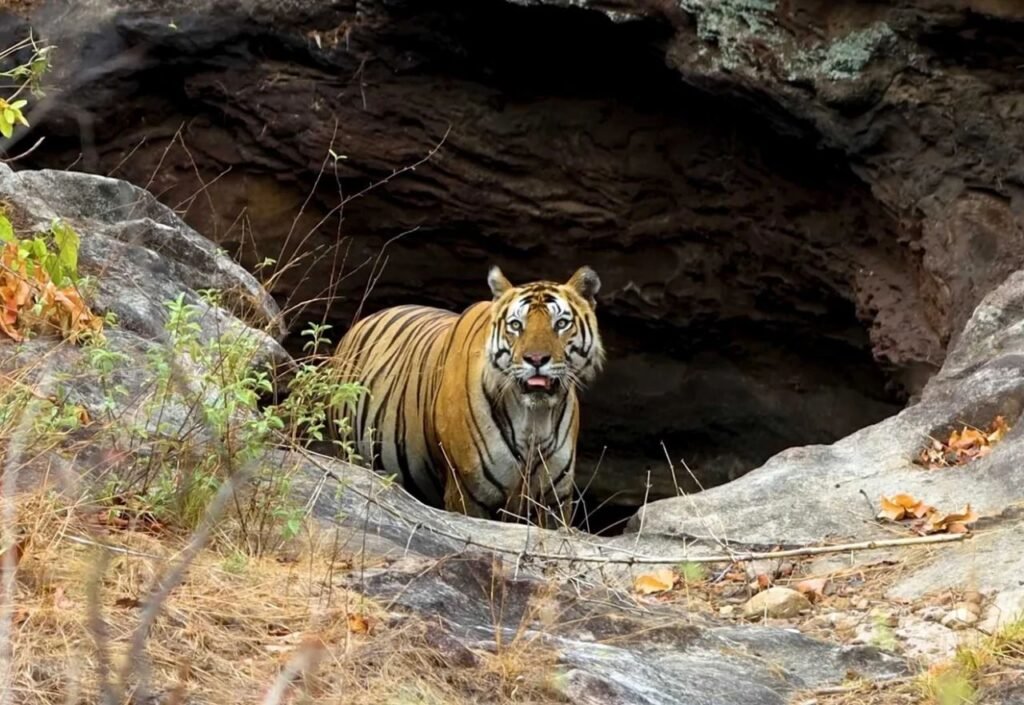
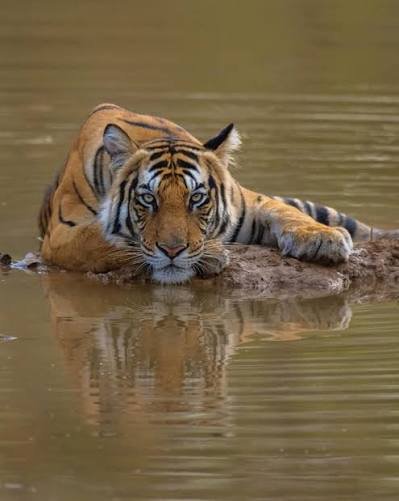
There are no resident tigers.
A forest waiting for its predator
A 12-year study conducted between 2010 and 2022 confirmed that Kawal has failed to establish a permanent tiger population despite having a recovering prey base.
Researchers used systematically placed line transects to monitor prey populations over the decade. Spotted deer numbers increased, while sambar, nilgai and chousingha populations remained relatively stable.
The forest, in ecological terms, has been rebuilding.
But the tiger has not followed.
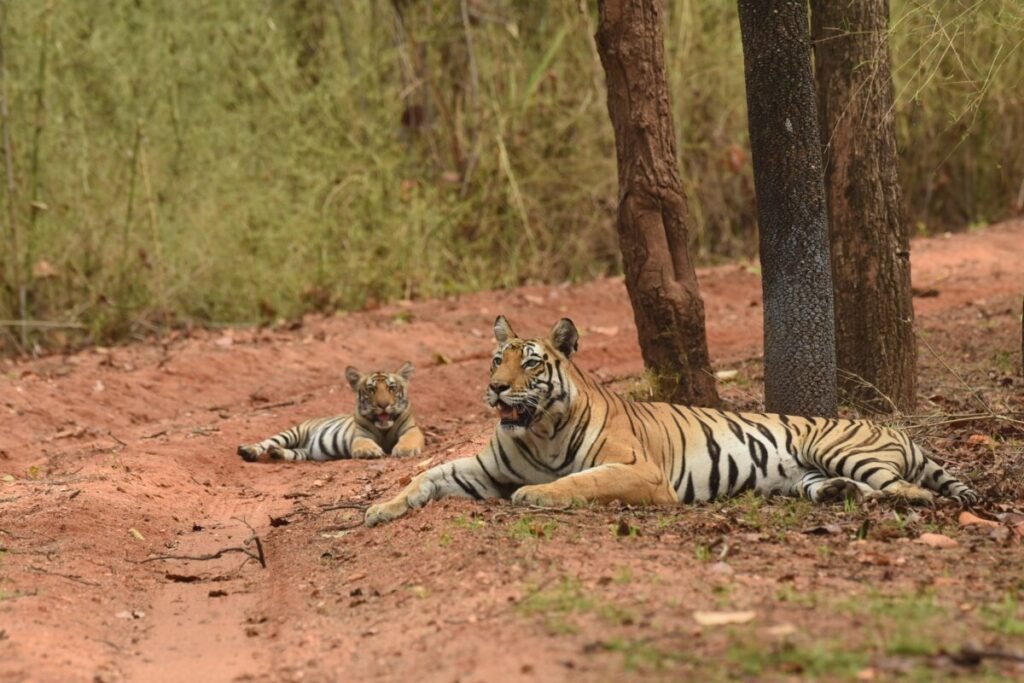
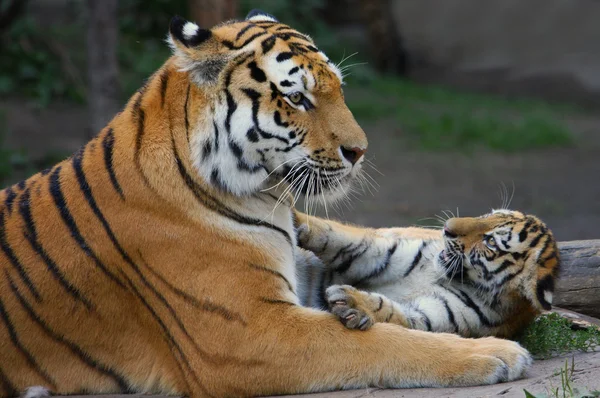
Since 2015, researchers recorded only 15 transient tigers entering Kawal from Maharashtra. Of these visitors, only two were females.
That imbalance is critical.
Male tigers are natural long-distance dispersers. Young males often leave their mother’s territory and travel hundreds of kilometres in search of territory. Females generally disperse shorter distances and tend to establish territories closer to their natal range.
As lead researcher Imran Siddiqui explains, males are more willing to cross unfamiliar and human-dominated landscapes, while females require safer and quieter habitats in which to establish territories and raise cubs.
The result is a biological dead end.
Male tigers occasionally make it to Kawal. Females rarely do. Without females, there can be no stable breeding population.
Stranded on the edge
The routes into Kawal reveal why.
Tigers dispersing south from Maharashtra use three principal pathways. One runs from Tadoba-Andhari through the Kagaznagar and Mancherial forest divisions. Another passes through Asifabad. A third approaches from Tipeshwar through Adilabad, Ichoda and Nirmal.
Among these, the Kagaznagar-Mancherial route is used most frequently.
But this landscape is increasingly divided by infrastructure.
Open-cast coal mines, the Ada irrigation project, electrified agricultural fencing and the Hyderabad-Nagpur railway line interrupt movement. National Highway 44 presents an even greater barrier, carrying heavy traffic and bordered in places by fencing.
For a tiger moving through this landscape, the danger is rarely a single obstacle.
It is the accumulation of obstacles.
A highway is followed by a railway. A forest patch gives way to a mine. A natural passage becomes an agricultural field. What was once continuous habitat becomes a fragmented mosaic in which every crossing carries risk.
The consequences extend beyond tiger movement.
Dispersing animals stranded along forest edges increasingly encounter livestock and people. Livestock depredation can trigger retaliatory poisoning, human casualties and growing resentment towards tiger conservation.
Free-ranging dogs add another layer of danger. They can transmit diseases such as Canine Distemper Virus while also chasing deer, competing with native carnivores and disturbing wildlife along village boundaries.
Protection inside, pressure outside
Kawal’s recovering prey populations demonstrate that protection within the reserve can work.
But the reserve cannot function as an ecological island.
Wildlife Conservation Trust President and CEO Anish Andheria points to another fundamental problem, the absence of sufficient inviolate space within the reserve itself.
As of 2023, 37 villages and 67 smaller settlements were located inside the core area, while another 267 villages existed in the buffer zone.
For a large carnivore requiring extensive territory, human presence within core habitat creates continual disturbance.
Andheria argues that successful tiger reserves such as Tadoba, Kanha, Pench and Ranthambhore demonstrate the importance of securing genuinely inviolate core areas. At the same time, he points to the poor implementation of mitigation measures along highways, railway lines, mining areas and irrigation projects across the wider landscape.
The problem, therefore, is not confined to Kawal’s boundary.
It is regional.
Conservation and the people of the forest
Yet behind the debate over corridors and tiger territories lies another story.
Kawal is also home to indigenous communities including the Raj Gonds, Nayakpods, Kolams, Pardhans, Thotis and Lambadas, whose lives have been intertwined with the forest for generations.
When Kawal was declared a Tiger Reserve in 2012, conservation was presented as compatible with the rights and livelihoods of forest communities.
For many residents, that promise has since become a source of deep disappointment.
Local Adivasi leader Siddam Bhujang Rao describes relocation efforts in which families were promised compensation, agricultural land, houses, schools and water.
Instead, some families relocated to sites such as Madhya Padaga found themselves with incomplete housing and little or no cultivable land.
Restrictions on access to traditional forest resources have further disrupted livelihoods. Mahua flowers, medicinal plants and grazing areas are not simply economic resources for these communities. They are part of their culture and identity.
The conservation challenge at Kawal therefore extends beyond wildlife management.
It is also about whether communities living alongside the forest can become genuine partners in protecting it.
The translocation dilemma
With natural female dispersal severely restricted, some wildlife managers have proposed assisted dispersal, including capturing female tigers from established populations in Maharashtra and moving them to Kawal.
The idea is scientifically understandable.
Aditya Panda, a member of the Standing Committee of the State Board for Wildlife, argues that artificial translocation can help establish populations in recovered habitats that remain beyond the normal dispersal range of females.
But other conservationists warn that moving tigers cannot substitute for restoring the landscape.
Prerna Singh Bindra, former member of the Standing Committee of the National Board for Wildlife, describes translocation as a temporary solution if corridors remain fragmented.
Imran Siddiqui similarly cautions that a released tiger will naturally explore its surroundings. If those surroundings contain highways, railway lines, villages and unsafe corridors, the animal may simply reproduce the same problem in another location.
A successful translocation therefore requires more than a healthy prey base.
It requires secure habitat, minimal human disturbance, soft release protocols and intensive post-release monitoring.
Restoring the road home
Kawal’s greatest opportunity may ultimately lie not in bringing tigers into the reserve, but in making it possible for tigers to return naturally.
The forest has prey.
It has habitat.
It has a strategic location between major tiger populations.
What it lacks is connectivity.
Kathan Bandyopadhyay, co-author of the long-term Kawal study, warns that a population introduced into an isolated reserve could remain vulnerable to inbreeding, conflict and eventual local extinction.
The lesson from Kawal is therefore larger than the fate of one tiger reserve.
Wildlife cannot survive in isolated green islands while the landscapes between them are progressively carved apart.
A highway can connect cities while disconnecting forests. A mine can generate economic activity while erasing a movement corridor. A railway can shorten human journeys while lengthening the journey of a tiger towards extinction.
Kawal stands at that crossroads.
Its forests have recovered enough to support the prey. Its position still offers a bridge between major tiger landscapes. What remains is to rebuild the ecological and social foundations that can make that bridge functional again.
Until then, Kawal will remain a paradox of Indian conservation, a tiger reserve with the forest, the prey and the potential for tigers, but without the one thing that would prove the landscape is truly connected.
A resident tiger.