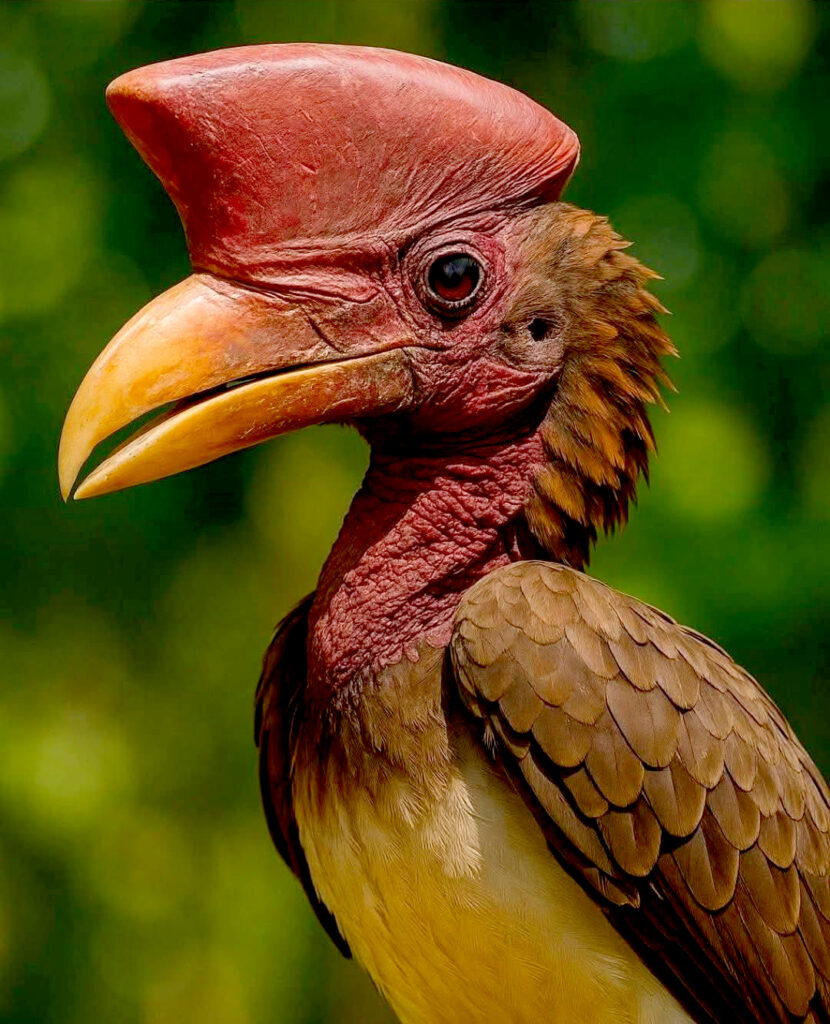
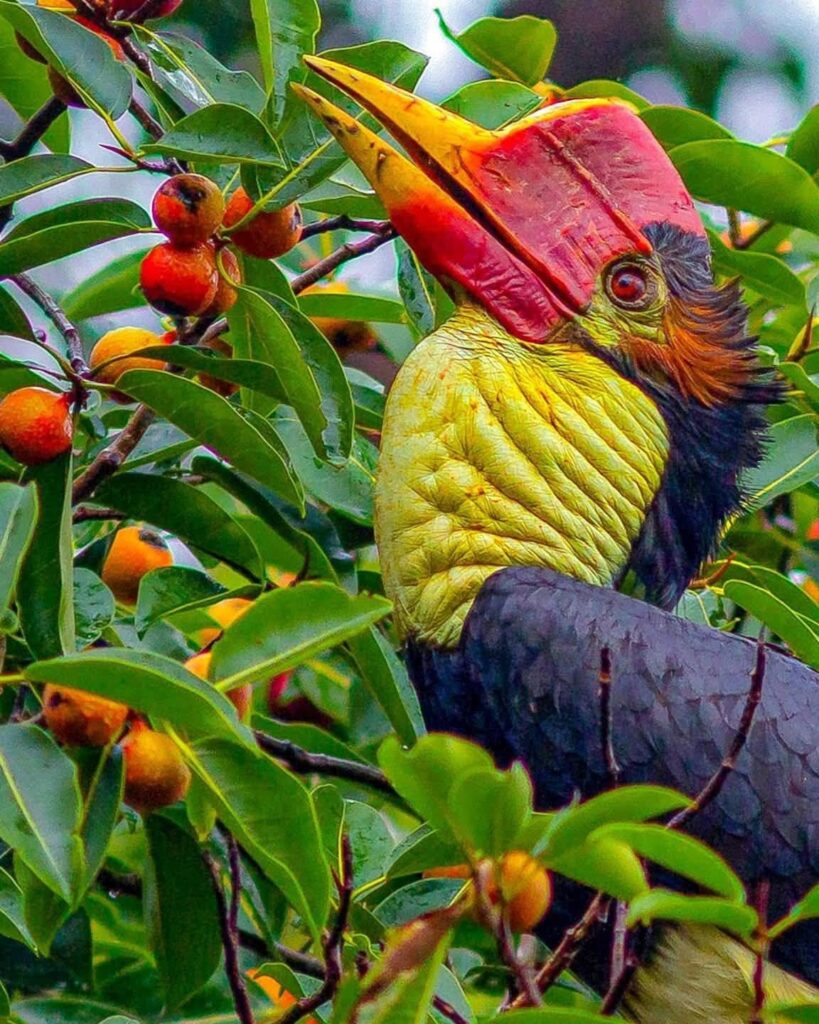
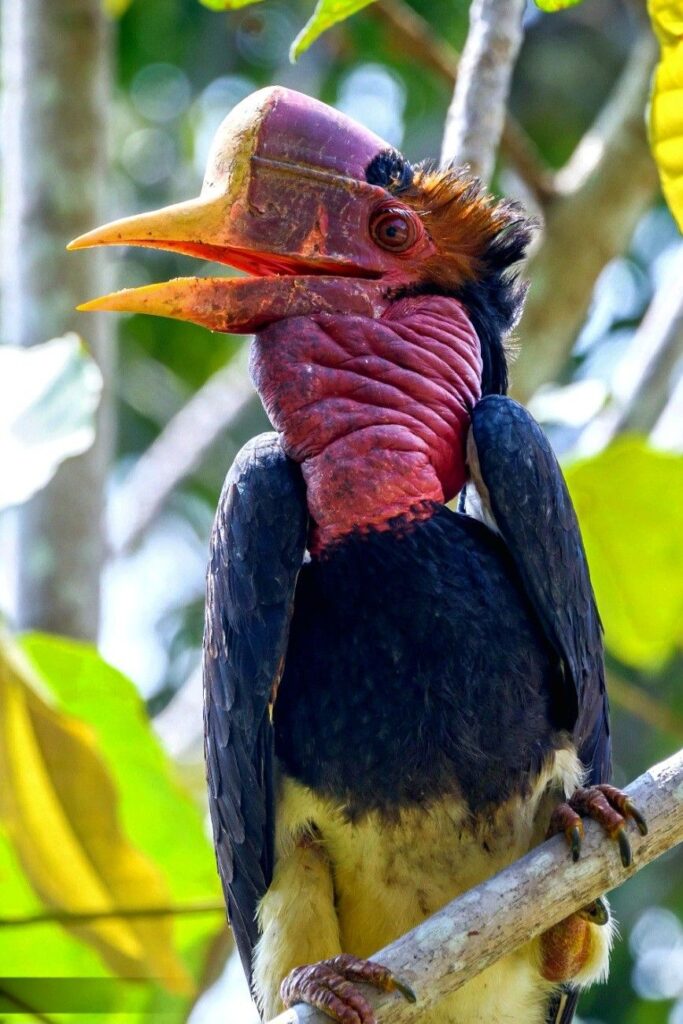
The Helmeted Hornbill (Rhinoplax vigil) is one of the world’s most extraordinary and endangered bird species. Recognized by its striking red casque, powerful yellow bill, and distinctive appearance, this magnificent bird inhabits the tropical rainforests of Southeast Asia, including Malaysia, Indonesia, Brunei, and southern Thailand. Unlike other hornbill species, the Helmeted Hornbill possesses a solid casque made of dense keratin, making it unique among birds.This remarkable species plays a vital ecological role as a forest gardener. Feeding primarily on figs and other fruits, it disperses seeds across vast forest landscapes, contributing to the regeneration and health of tropical ecosystems. Its strong pair bonds, spectacular aerial displays, and loud, echoing calls make it one of the most fascinating inhabitants of the rainforest canopy.Despite its ecological importance, the Helmeted Hornbill faces an alarming decline. Illegal hunting for its solid casque, often referred to as “red ivory,” has driven the species towards extinction. Combined with rapid deforestation and habitat fragmentation, these threats have caused severe population losses across its natural range. As a result, the International Union for Conservation of Nature (IUCN) classifies the Helmeted Hornbill as Critically Endangered.Conservation efforts are now focused on protecting remaining forest habitats, strengthening anti-poaching measures, and engaging local communities in wildlife conservation. Raising public awareness is equally important to reduce demand for illegal wildlife products.The Helmeted Hornbill is more than an iconic bird—it is a powerful symbol of the urgent need to protect Southeast Asia’s biodiversity. Safeguarding this remarkable species ensures the preservation of the forests it helps sustain, leaving a lasting natural heritage for future generations.